


Understanding Bid-Ask Spread and Slippage in Cryptocurrency Markets

with ArbitrageScanner!
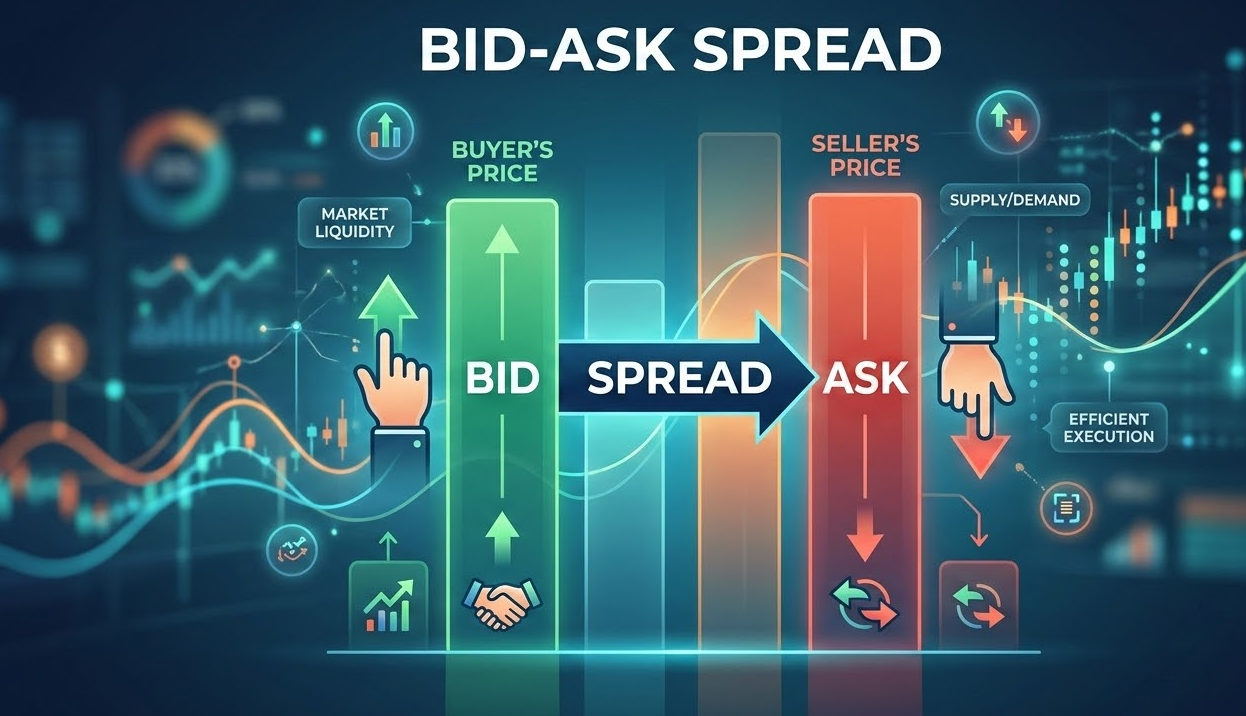
Bid-ask spread is the difference between what a buyer will pay (bid) and what a seller will sell for (ask). Bid-ask spreads show how much supply exceeds demand. In an efficient market, you may always see two price quotes - to execute a buy order immediately at the ask price and to execute a sell order immediately at the bid price. The bid and ask constitute the total bid-ask spread.
Understanding Bid-Ask Spread
Basic concept explanation
Bid-ask spread is the difference between what a buyer will pay (bid) and what a seller will sell for (ask). Bid-ask spreads show how much supply exceeds demand. In an efficient market, you may always see two price quotes - to execute a buy order immediately at the ask price and to execute a sell order immediately at the bid price. The bid and ask constitute the total bid-ask spread.
Market maker role
Market makers add liquidity by quoting both buy (bid) and sell (ask) prices for a security or stock simultaneously to make it easier for other traders to trade. Market makers make their profits through a bid-ask spread by buying at the bid price and selling at the ask price. Market makers continue to provide liquidity continuously to allow other traders to open and close their trading positions at any time and to avoid having to wait for a natural counterparty.
Price formation process
Price formation is affected by changes in supply or demand and will fluctuate based on these changes. When new orders come into the exchange, both the best bid and the best ask change based on whether there are bids at higher prices or asks at lower prices. The average price of a security at a given point in time is the price between the bid and ask or the natural price.
Trading implications
For traders, a wide bid-ask spread is an immediate transaction cost. If you buy shares or a crypto token and then sell the same share/token, you will incur the cost of the spread. Therefore, it is preferable to have a narrow bid-ask spread because it shows that the market is efficient and liquid.
Real-world examples
Let’s assume that a Bitcoin is trading at a bid price of $60,000 and an ask price of $60,100 or have a spread of $100. If you place a market order to buy one Bitcoin, you will pay $60,100. If you sell it one second later, you will receive $60,000. Therefore, your bid-ask spread will be a cost of 0.16% to you to enter the trade.
Market Mechanics Deep Dive
Order book structure
The order book is a list of open buy and sell orders in a digital format. All orders are organized by price levels. There is not currently a price shown, but rather a ladder of liquidity that shows all the prices you can sell or buy at. The highest bid will be on the top of the ladder, which shows you where your last bid was for the underlying security, and the lowest ask will show you where the market is to enter buyers in to purchase.
Price discovery process
The process for determining market prices for securities on exchanges is called price discovery, which happens when buyers and sellers reach an agreement on the price. The price moves towards its next lowest available offer when market orders are executed against the order book’s lowest-priced seller.
Liquidity dynamics
The more liquidity a security has, the tighter its bid/ask spread will be. The more liquid the security, the larger the volume of buy-sell transactions competing for the same price will be, resulting in tighter bid-ask spreads. Generally, liquidity is defined as how quickly and easily an asset can be turned into cash without price fluctuations.
Volume relationships
Assets with significant daily trade volumes (such as Bitcoin or Ethereum) show a correlation between their daily trade volume and bid-ask spread. The existence of many buyers/sellers in the market at once helps keep the bid-ask spread narrow and lowers the cost for traders who wish to buy/sell large amounts.
Trading impact
Once traders understand how price discovery works, they can avoid being "trapped." In low liquidity markets, even a minor market order may cause the price of an asset to suddenly fluctuate a great deal due to the unexpected execution of that order, which will lead to loss of profit and/or inability to execute trades.
Spread Analysis
Calculation methods
To compute the bid-ask spread for an asset, simply subtract the bid from the ask. Measuring the spread in terms of dollars alone can be misleading because different assets will have very different prices.
Percentage evaluation
Bid-ask spreads can also be computed as a percentage of the ask price. The formula to calculate a bid-ask spread as a percentage is: ((Ask Price - Bid Price)/ Ask Price)*100%. This percentage spread can help compare costs to trade BTC vs. another smaller market cap altcoin.
Market implications
A wide bid-ask spread usually shows that there is either not much trading activity (i.e., market liquidity) or that prices are moving dramatically up and down (i.e., volatility). During major news events, for example, when there is more than usual market volatility, market makers will often pull back their orders to limit their risk. As a result, the bid-ask spread will tend to be wider than normal and will therefore result in higher costs for retail traders.
Trading considerations
When you are preparing to place your order, it is also a good idea to analyze the spread; in other words, you should analyze the bid-ask price to see if it is reasonable. If the spread percentage is high (greater than 1% for example), then it would be wise to re-evaluate the type of order you are going to place (market versus limit).
Optimization strategies
Strategies to optimize your trading will vary from trader to trader; however, all traders can use tools or exchange interfaces to calculate the bid-ask price and to assess (via calculation) whether the current price is appropriate based on the amount of liquidity available to support your position size.
Slippage Exploration
Concept definition
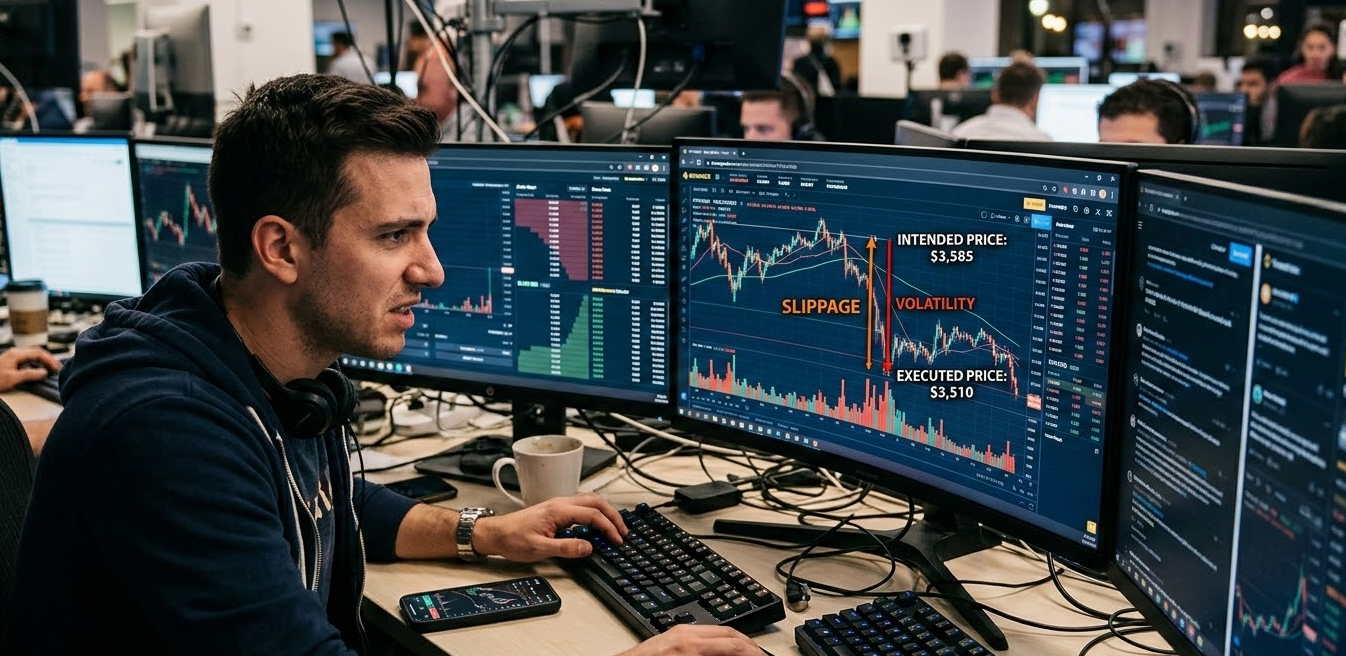
Slippage is when the actual price at which your order is executed is different from the price you intended to pay when the order was originally placed. It is most often caused by two factors: 1) extreme market volatility, and 2) extreme illiquidity. Slippage will occur whenever an order is filled between the time the trader has submitted an order via a bid and/or has pressed "buy" and the time the order was filled on either the exchange or blockchain.
Occurrence factors
There are two primary factors that cause slippage: volatility and illiquidity. Due to the nature of fast moving markets, if an individual is placing an order to buy a large number of shares with thin liquidity at a certain price, that individual's order may "go through" many levels of an order book due to the continuous changes of the ask price over time (0.1 seconds to 0.2 seconds).
Impact assessment
Slippage is proportional to your order size; therefore, larger trades of a specific asset result in a higher percentage of slippage than smaller orders. For example, while you may have a $100 order with no slippage, if you have a $100,000 order in a crypto pair that has very low volume, it could be possible to experience a 5% or greater loss due to slippage.
Market conditions
Market situations may lead to "flash crashes" or major announcements in cryptocurrency which leads to a lot of trading at once, meaning the difference between the ask price and the last trade price will become a lot larger than what it would usually be.
Trading implications
Having a large amount of slippage can make a successful trading method into an unsuccessful trading method, so using a trading platform that allows you to have a "Slippage Tolerance" will help protect your investments.
Types of Slippage
Positive slippage
Slippage isn't necessarily a bad thing as an example of positive slippage would be if you placed a Market Buy order, but the price dropped while your order was being completed, allowing you to purchase at a lower price than you intended to.
Negative slippage
The most common form of slippage is negative slippage. It occurs when you are quoted one price for something, but then you end up paying a higher price when you make the purchase (for a buy order), or selling for less than you were originally quoted (for a sell order). This represents an additional cost to the buyer and seller of the item.
Market conditions
Both types of slippage are caused by market efficiency. In a perfectly efficient and liquid marketplace (i.e. no delays/slow exchanges, etc.), slippage will be close to zero, but in the crypto market, since decentralized exchanges (DEXs) create block times which are slower than normal, there will be more slippage in the marketplace.
Impact factors
The nature of decentralized environments and block confirmation times act as significant impact factors, often increasing the discrepancy between quoted and executed prices compared to traditional centralized exchanges.
Management strategies
Many professional traders will use limit orders to manage slippage, where they set a price they want to buy or sell an item for (with a limit order) but have no guarantee that their order will be filled, or use a market order to purchase or sell items at the market price (with a market order) without knowing what that price will be when their orders are filled.
Risk Management
Tolerance setting
Most crypto trading applications (such as Uniswap or crypto.com) will allow you to set a slippage tolerance (i.e. 0.5%, 1%) before buying or selling an item. If a security's price exceeds its limit, the transaction will not be completed.
Order execution
In order to complete your order successfully, you should time your order execution correctly. To ensure your market order is not placed at the "top" of the market prices on the first few days of trading or at the peak of volatility, you should avoid making a market order at this time.
Position sizing
When trading in a low liquidity security, you should break up your buy and sell orders into smaller amounts. This will help to prevent your order from affecting the bid and ask price of the security you are trading.
Market timing
Strategic timing involves avoiding periods of extreme volatility unless necessary, ensuring that the market has enough depth to absorb the order without significant price deviation.
Cost control
In determining the risk-to-reward ratio on an order, you must consider the bid-ask spread as well as any slippage. If you want to make a 2% return on your trade, and you expect that the bid-ask spread and slippage will total 1.5%, then you are likely not going to take this trade as it is too much of a risk.
Optimization Strategies
Order breakdown
Institutional traders will often use "Iceberg Orders" or TWAP (Time Weighted Average Price) strategies. Instead of placing one single large order, a trader may place a series of small orders to minimize the impact of the large order on the bid-ask spread.
Timing considerations
Generally, the best time to trade a cryptocurrency is when the major markets are open and operating together, for example during the London/New York overlap. During these times, the bid-ask spread will narrow and liquidity will increase for the majority of cryptocurrencies.
Market selection
There are many exchanges on which to trade cryptocurrencies, and not every exchange will provide you with the same bid and ask prices for a given security; therefore, you should use a bid-ask calculator to compare the bid-ask spread across various exchanges.
Order types
The choice between limit and market orders is fundamental. Building long-term positions often benefits from limit orders to ensure the lowest cost, while exiting volatile positions might require market orders despite slippage.
Execution planning
Choose between how important speed of execution is or the price you pay before execution. The result of accepting the adverse slippage from putting out a Market Order when exiting a position during a crash is because of your decision on the importance of speed versus cost. When building a long-term position use Limited Orders in order to wait for the lowest cost.
Advanced Concepts
Market maker impact
In cryptocurrency, AMM (Automated Market Makers) provide liquidity by using math to determine price. Many times the difference in price between the Quoted Price and the Execution Price on DEXs (Decentralized Exchanges) is based off the relationship between the amount of liquidity in the market and the need for liquidity (the size of your trade).
Liquidity analysis
Advanced traders evaluate the "Depth Chart". If an order book is thick with orders it makes for an increased volume of orders in close proximity to the current price and allows for a more consistent market price more so than if there were not as many sales orders available.
Order book depth
Order book size refers to how large an order can be between Prices without causing a change in price. Wider bid-ask spreads indicate thinner depth.
Volume relationships
The relationship between trade volume and the resilience of the order book is critical. High volume usually supports deeper order books, which in turn facilitates larger trades with minimal price impact.
Market efficiency
As more bots and traders engage in arbitrage activity, the greater the level of efficient market will exist. The larger the discrepancy in price of any security between the exchanges, the faster the difference will be impacted; thereby allowing a closer relationship between price (market price) and true value of the security (mark price).
Implementation Guide
Trading approach
Evaluate Liquidity: Research 24 hour volume and Order Book before making buys/sells in market.
Order execution
Order Type Selection: Use Limited Orders whenever possible so you will not incur unanticipated costs from negative slippage.
Cost management
Cost Calculation: Use the Bid-Ask Spread (in percentage) to determine how much you will pay to enter the market.
Risk control
Set a Tolerance Level: On decentralized exchanges (DEXs), ensure you set slippage tolerance manually according to current market volatility rather than leaving it set as "Auto."
Performance monitoring
Monitor Trade Performance: Check your trading history to determine if your executed trades (sales) were executed in accordance with your strategy.
Conclusion
Understanding the differences between bid prices and ask prices, and how market liquidity will impact execution of trades is what differentiates a skillful trader from an amateur trader. If you gain insight into bid/ask spreads and slippage, as well as become aware of how much liquidity impacts your trades, then you will be able to minimize the cost of your trades substantially. In the volatile world of cryptocurrencies, every fraction of a percent adds up when it comes to trading. Always place an emphasis on increasing market efficiency, choose appropriate order types, and continuously analyze order book depth. This will help you optimize performance of your trades.
Frequently Asked Questions
How does market liquidity affect bid-ask spread?
A greater amount of liquidity will create a tighter bid/ask spread because there are more buyers and sellers competing for the securities. Conversely, when there is little or no liquidity, the spread will become wider, which increases the cost of buying and selling.
What causes extreme slippage in crypto markets?
Low liquidity, combined with high volatility, creates extreme slippages. When large market orders are placed, they "wipe out" all available price levels in the order book, leading to execution of cases at a much higher or lower than expected price.
How can traders minimize negative slippage?
Traders can reduce the risk of negative slippage by using limit orders, trading during times of high volume, and breaking down larger trade quantities into smaller pieces so as not to have an impact on the market price of the security.
When should traders use limit vs market orders?
A trader should use a limit order when price execution certainty is more important to him/her than speed of execution. In cases where immediate execution of a trade is required, and there is sufficient market liquidity to handle the bid/ask spread, use a market order.
How do order book depth and spread relate?
There is an inverse relationship between order book depth and bid/ask spreads. A market that is considered to be deep, typically will have a very narrow bid/ask spread; in contrast, a market that is shallow and contains very few orders will experience substantially wider bid/ask spreads.
Want to learn more about crypto arbitrage?
Get a subscription and access the best tool on the market for arbitrage on Spot, Futures, CEX, and DEX exchanges.

You might be interested

Complete Guide to Altcoin Investment and Trading

Top Crypto Investment Funds: Complete Analysis of Market Leaders

How to Research and Invest in ICOs: Complete Guide
