


Complete Guide to Altcoin Investment and Trading

with ArbitrageScanner!
The digital asset landscape has developed tremendously since Bitcoin was the primary asset in this space. Altcoins (which refers to all non-Bitcoin cryptocurrencies), for example, are now the most significant drivers of innovation within the crypto world, offering investors access to decentralized finance (DeFi), non-fungible tokens (NFTs), and much more. If you are interested in purchasing altcoins for long-term investment (or trading for shorter-term gains), it's important that you know how these digital currencies may differ from one another. This guide will take you through everything you need to know about navigating the crypto space, evaluating types of digital assets, and trading on an exchange.
Understanding Altcoins
Definition and origin
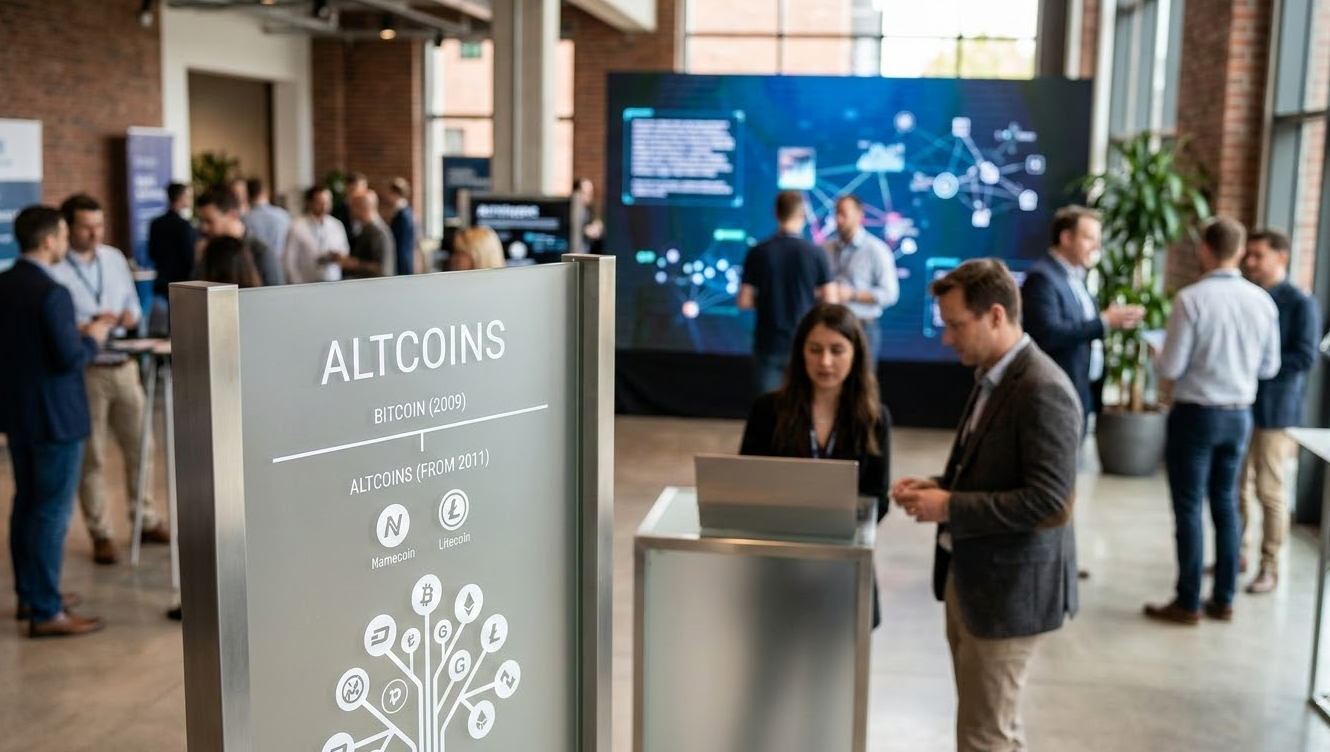
"Altcoin" is short for "Alternative Coin" and refers to all cryptocurrencies other than Bitcoin. The first altcoins (for example, Namecoin, Litecoin) were created in 2011 and were intended to build upon what many viewed as inherent issues with the Bitcoin system, like transaction speed and centralisation of mining. Since then, thousands of new altcoins have entered the market and serve different purposes in the overall blockchain economy.
Relationship to Bitcoin
Bitcoin is still the primary store of value (commonly referenced as "Digital Gold"), while altcoins continue to be viewed as higher Beta assets, meaning that their price movement typically follows that of Bitcoin, but with much greater volatility. Therefore, during periods when Bitcoin is in a consolidation phase (i.e., when its price is relatively stable) we see the phenomenon known as "altcoin season", or a period where there is large amounts of Capital flowing from the leading crypto asset; Bitcoin, to various unknown altcoins, resulting in a dramatic increase in their price.
Market evolution
Altcoin markets have evolved from clones of Bitcoin's open-source code to an ecosystem of complex and sophisticated technologies. We have seen a shift from ICOs (Initial Coin Offerings, 2017) to functional tokens that support Decentralized Applications (dApps). The current crypto landscape is made up of different types of tokens (utility), which we categorise as governance tokens, privacy coins, and stablecoins pegged to fiat currencies.
Investment implications
Investing in Altcoins offers a different risk-reward profile to Bitcoin; however, while there is the potential for 10x or 100x returns (i.e. returns that are 10 or 100 times the amount you invested), there is also a higher chance (risk) of projects failing. Successful traders who are active in trading crypto, know that to make up for losses from altcoins, they must balance blue-chip investment (e.g. Ethereum) with speculative low-cap tokens.
Technology foundations
Most Altcoins are created either through their own Blockchain or as a Token on another Blockchain; for example, most of the popular Altcoins are created using the ERC-20 token standard (Ethereum). Other popular Altcoins (e.g. Solana, Cardano) are created using different consensus algorithms than Ethereum has to improve transaction processing speed and reduce transaction fees when compared to older Blockchains.
Notable Altcoin Analysis
Ethereum
Ethereum is the single largest Altcoin on the market. Unlike Bitcoin, Ethereum was created to be a World Computer enabling developers to create Smart Contracts. It is the foundation of the DeFi ecosystem, and many crypto investors view it as a core component of their portfolios. When you buy and sell Altcoins, you will most likely be using the Ethereum blockchain or one of its Layer 2 Solutions.
Other Major Altcoins
Other popular Altcoins include:
- Solana (SOL): Extremely fast transactions
- Polkadot (DOT): Focused on Interoperability / facilitating communication
Stablecoins are important tools for investors who want to keep their value in a stable asset without converting to fiat currency examples, like US dollars.
Investment Process
Research Framework
You should have a strategy in place before trading, called the DYOR approach, where you will need to research the underlying fundamentals of each project you are going to consider, understanding the overall development team working on the project and whether they are a transparent group with experience; a project that is aiming to solve real-world challenges; looking into whether the tokenomics of the project will have competitive advantage, there is a supply cap on the token; and whether there is a strong community on social media platforms such as Twitter and Discord with organic growth.
Finding the most suitable altcoins to invest in is not an easy task because of all the hype in the cryptocurrency markets, but evaluating altcoins for investment purposes requires going beyond those types of things and finding actual trading volume and utility.
Portfolio Strategy
Establishing a well-diversified portfolio to use as a hedge against the volatility of cryptocurrencies in the markets can be accomplished using the 70/20/10 strategy, which places 70% of your portfolio in the more established cryptocurrencies such as BTC / ETH 20% of your portfolio in altcoins that have a mid level market capitalization, and 10% of your portfolio in altcoins with higher risk and lower market capitalization, thereby allowing you to participate in "altseasons" and also provides a level of protection to your core holdings of cryptocurrencies.
Trading Implementation
Exchange Selection
To begin trading cryptocurrencies, you should select a reliable cryptocurrency exchange for altcoin trading; a few high-profile exchanges offering high levels of liquidity and many trading pairs such as: Binance, Coinbase, and Kraken. Also, when selecting your trading platform, consider such things as: commissions, security, and availability of various altcoin trading pairs.
Purchase Process
To purchase an altcoin, you normally go through the following steps:
- Create an account at a coin exchange;
- Complete KYC requirements;
- Deposit fiat, or receive cryptocurrency transferred from another wallet;
- Find the trading pair you wish to trade, such as SOL/USDT.
To buy and sell an altcoin, you should choose to place a Market (instant) order or Limit (conditional) order. The majority of exchanges that sell altcoins also have a user-friendly interface, which allows traders to buy their first altcoin within minutes after creating an account with the exchange.
Risk Management
Market volatility
The altcoin market is highly volatile and it is very common to see even a top tier altcoin drop 20% (or more) in one day. This is why it's very important to only invest what you can afford to lose when trading altcoins.
Project risks
There are many scams that exist within the world of altcoin trading and not every token is a legitimate token. There are many cases of "rug pulls" and "honeypots." Therefore, always check to see if the project you are trading has undergone a security audit.
Security concerns
In addition, security measures offered through an exchange, such as Two-Factor Authentication (2FA), should be considered non-negotiable when seeking to protect your crypto assets.
Position monitoring
Use "stop-loss" orders within your trading platform as a safeguard in case the price drops.
Exit planning
Many unsuccessful investors do not have an exit plan. Trading an altcoin requires you to be disciplined. Establish profit objectives. You may decide to sell half of the tokens of an altcoin you purchased for $100 when it reaches $200. This is known as taking out your seed.
Storage Solutions
Exchange custody
The convenience of leaving your funds on a crypto exchange as a frequent trader has many advantages. However, if the crypto exchange is hacked or goes out of business, you could very likely lose your digital asset due to their lack of security.
Wallet options
Two categories exist for wallets:
- Hot Wallet (MetaMask, Trust Wallet) are great for trading without any delay, but they are internet connected.
- Cold Wallet (Ledger, Trezor) offer the best security, as they are not connected to the internet.
Security measures
You should implement robust security protocols. As noted, cold wallets offer superior protection. Always prioritize platforms and tools that emphasize audited security measures.
Access management
You can have total control of your keys with a crypto wallet. Managing your own private keys and access points is fundamental to decentralization.
Backup strategies
Always ensure you have secure backups of your wallet access. Never disclose your seed phrase to anyone, as this is the only way to recover your assets if access is lost.
Investment Strategy
Market timing
If you are nervous of missing out and want to jump in and buy altcoins at an all-time high, consider timing the market carefully. Buy multiple altcoins on red days when there is the most fear in the marketplace.
Entry points
Consider DCA (Dollar Cost Average) to spread your buying over a long period of time, instead of chasing green candles.
Exit planning
As part of your strategy, follow your established profit objectives to ensure you are not left holding assets during a market downturn. Taking profit systematically is key.
Position scaling
Manage how much you allocate to each trade. By using the 70/20/10 rule or similar scaling methods, you can increase or decrease exposure based on market conditions.
Performance tracking
Tracking the performance of your trades can help you analyze what types of altcoins are producing the best returns and which of your altcoins are affecting your overall return negatively. You should also analyze trading fees on exchanges to ensure they aren't draining profits.
Future Considerations
Market evolution
As a long-term investor, it is critical to remain updated on these trends. The space continues to shift from simple value transfers to complex utility systems.
Technology development
The maturation of blockchain technology is providing us with ways to utilize altcoins beyond just a means of financial speculation. With the emergence of tokenizing Real World Assets (RWAs) and the integration of AI and crypto, there will be many projects that have economic value for the altcoin selection process in the future.
Regulation impact
There is more regulation being placed on altcoins than that of Bitcoin, by the SEC and it is likely to increase.
Adoption trends
Increased regulation will lead to greater institutional investment, but may also limit users from trading the specific tokens of their choice.
Investment implications
The evolving landscape means investors must balance the potential for high institutional liquidity against the risks of regulatory restrictions on certain asset classes.
The Bottom line
The altcoin universe "is an exciting, diverse and rapidly changing" place where both crypto enthusiasts and professional traders can thrive when performing significant due diligence, using secure exchange platforms and incorporating a risk management strategy when trading in altcoins to create a strong digital asset portfolio. Patience, a willingness to learn continuously and a disciplined approach to investing are all necessary to succeed in the world of cryptocurrency.
FAQs
How do you evaluate altcoin investment potential?
- Utility of the product/project
- Strength of the development team
- Market liquidity
- Offers a unique solution to a problem in the blockchain ecosystem.
What security measures are essential for altcoin trading?
- Always use 2FA while using any cryptocurrency exchanges.
- Use a hardware wallet for long-term storage of assets.
- Never disclose your seed phrase to anyone.
How should investors manage altcoin portfolio risk?
- Diversify their portfolio across various sectors (DeFi, Layer 1s and AI).
- Use stop-losses.
- Limit to 5%-10% of their total portfolio investment in a single low-cap altcoin.
What factors indicate a promising altcoin project?
- Strong trading volume.
- Development team is making regular commits on Github.
- Partnerships with other established companies.
- Transparent roadmap.
How can investors protect against altcoin market volatility?
- Utilize stablecoins to lock in gains.
- Use DCA when buying altcoins.
- Avoid margin trading unless you are very experienced.
Want to learn more about crypto arbitrage?
Get a subscription and access the best tool on the market for arbitrage on Spot, Futures, CEX, and DEX exchanges.
You might be interested
Top Crypto Investment Funds: Complete Analysis of Market Leaders
Cryptocurrency Nodes and Masternodes: Complete Guide
Understanding Fiat and Cryptocurrency: A Complete Guide
