


Cryptocurrency Nodes and Masternodes: Complete Guide

with ArbitrageScanner!
The blockchain is made up of multiple nodes and masternodes (which can also be called master nodes). Although there are many definitions for each of those terms in regard to different cryptocurrencies, the general definition is that the nodes and masternodes create a consensus mechanism so that the blockchain can continue operating in a decentralized manner.
Understanding Crypto Nodes
Basic definition
At a most basic level, a cryptocurrency node is a computer that runs software that processes the respective cryptocurrency's transaction data. Think of the blockchain as a big giant shared database. The node operates as one of the database participants that verifies a transaction entered into this database by having a copy of that same database on their own computer (within the network). Without the existence of nodes, the blockchain itself would no longer function because there would not be anyone to store or verify the data contained in the blockchain.

Network function
When a new cryptocurrency transaction is created, the transaction is published or broadcast to every node in that cryptocurrency's network. Each node, upon receiving the transaction, checks to make sure that the transaction is valid per the cryptocurrency's protocol rules, which include checking for sufficient funds in the account that originated the transaction and checking to make sure the digital signatures associated with the transaction are valid. Once all nodes have verified the transaction is valid, the transaction is passed on to all nodes until such time that the transaction is included in a newly created block (which is the way all transactions eventually get confirmed).
Node importance
Nodes are the main resource for creating decentralization. A decentralized network is more difficult to attack, block or censor than a centralized network. The more nodes in the network, the more resistant the network will be against any potential attacks or censorship. In the case that one node goes offline there will be hundreds of thousands of other nodes left to keep the network alive (for example Bitcoin, Ethereum). Because of this distributed nature of the network, the technologies built on it can be defined as “trustless,” which means that a person does not need to trust a bank to verify transactions; they are able to trust the whole network through its collective verification.
System architecture
The architecture of the blockchain is based on the P2P Model, or Peer-to-Peer Model; it differs from how a traditional bank works (with regard to approving transactions). With traditional banks, when someone wants to send money, they are required by the bank to wait for a server to confirm their transaction before it can be processed. On the other hand, with respect to blockchain, there is no server; the transactions are confirmed via the consensus protocol used by the nodes around the world. As a result, no one of these nodes can modify/change the transaction history without the central majority agreeing.
Node Types and Functions
Full nodes
A full node is regarded as a “heavyweight” participant in the network. A full node downloads/retains every block and transaction that has ever taken place on the blockchain. A full node is the final source of truth; therefore, it will verify every transaction from the ‘Genesis Block’ to the present. Therefore, by running a full node, a user is directly contributing to the overall security of the blockchain and providing themselves with complete financial sovereignty because they will not have to rely on an intermediary service to provide confirmation of their balance.
Lightweight nodes
A lightweight node is often referred to as an SPV (Simplified Payment Verification) node. A lightweight node does not retain the entire blockchain; it only downloads the headers of the blocks. Lightweight nodes are usually used by an SPV, which does not use as much memory or time as a full node does. However, lightweight nodes rely on full nodes to provide the information needed to confirm a transaction.
Listening nodes
A listening node is commonly referred to as a “Supernode.” A listening node is a full node that can be seen publicly. Nodes serve as communication hubs, facilitating communication by forwarding data between additional nodes located behind firewalls or connected to private networks. Nodes also transfer large amounts of data; thus, play a crucial role in supporting overall blockchain connectivity.
Mining nodes
Miners operate on a Proof of Work (PoW) network such as Bitcoin and complete the computationally intensive work required to create new blocks through mining. All miners must operate a node (or will connect to a node) to receive network updates; however, only a subset of available nodes are mining nodes. Mining nodes are specifically intended to perform work to secure the network while working with the process of minting new coins.
Network roles
A node's purpose depends on the protocol in use. For example, nodes may work together in "sharded" blockchains by processing multiple transactions at once to improve the speed of the network. In a Layer 2 solution, nodes typically handle off-chain transactions and report back to the main Bitcoin or Ethereum ledger to reduce costs associated with transactions.
Masternode Analysis
Definition
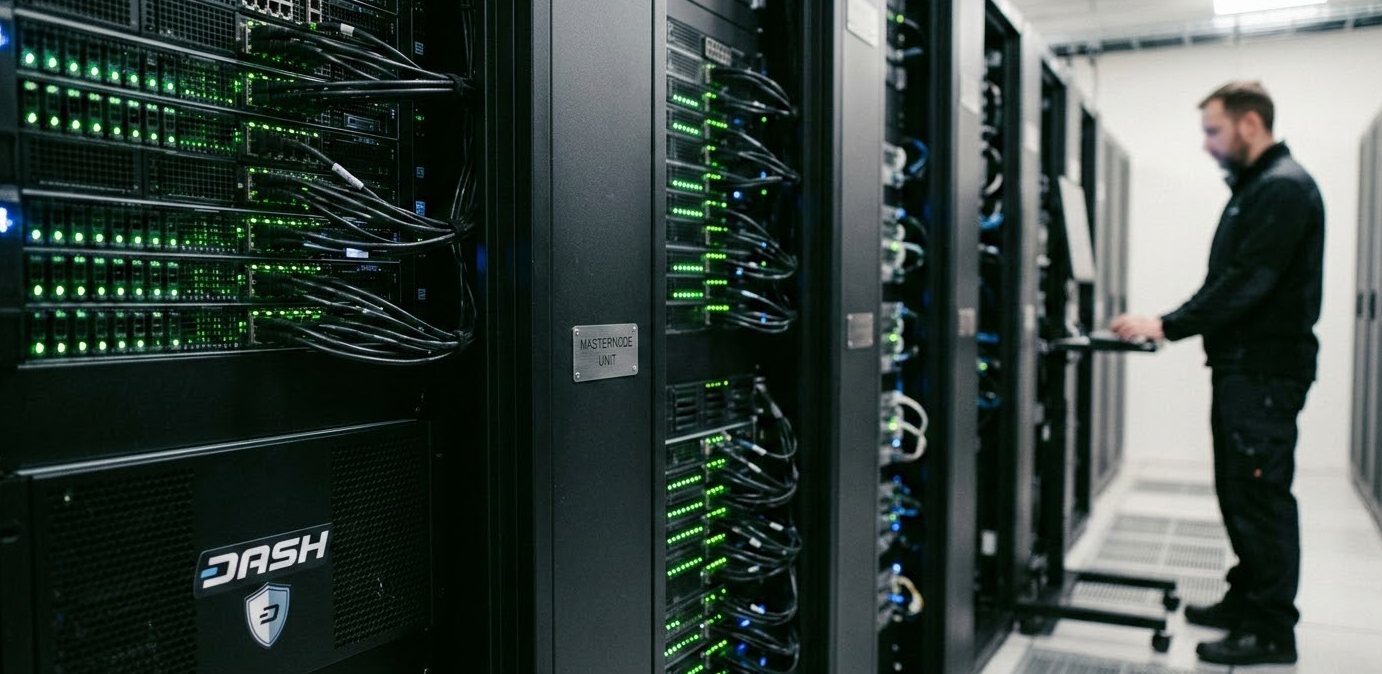
Masternodes are highly specialized servers that can perform functions that cannot be completed by a full node. Initially used in Dash's blockchain, masternodes can process transactions through a greater volume than other full nodes can. Furthermore, masternodes require a higher degree of " stake " (>900 coins) in order to run and operate within the Dash network.
Functions
In the Dash blockchain ecosystem, masternodes can process and relay transactions through a process known as " InstantSend " (less than 1 minute confirmation of a transaction); furthermore, can process and anonymize user transactions through the use of a feature known as "PrivateSend." Lastly, masternodes typically have a right to vote as operators within a given project's governance structure, meaning they will assist with developing a direction for the project or with decisions on spending funds from the project's treasury.
Requirements
Not every person has access to operate a masternode. What is required?
-
Collateral: Some amount of cryptocurrency (for example 1000 DASH or a specific amount of Zcoin/Firo) needs to be locked into a wallet.
-
Hardware: Using a dedicated server or a VPS.
-
Uptime: The device must connect to the internet at all times and have a fast connection.
-
Static IP: A static IP address is needed so that the network knows how to find you via nodes.
Network impact
Masternodes bring stability to the blockchain because they hold large quantities of the asset. This gives them a financial incentive to keep the network running properly, this “skin in the game” attitude of the operators results in no malicious actions on the network and makes sure that those making the governance decisions will have the network’s best interests involved.
Node Implementation
Setup requirements
How do you create a Node? Each protocol requires a different amount of hardware and bandwidth to operate as a node. For a Bitcoin full node, you need approximately 500GB or more of free SSD space and 8GB of RAM. For more complex networks like Horizen, the requirements are generally more than bitcoin will require. Therefore, it is common for professionals to operate with a dedicated server or cloud service (like AWS or Digital Ocean) to guarantee 100% uptime.
Operation process
How does a Node Operate? Once you have your hardware ready, you will need to download the core software (like bitcoin core or dash core). The first time you connect your node to the network, it may take anywhere from a few hours to multiple days to download the complete copy of the relevant blockchain from the network. Once your node is in sync it will begin connecting with other nodes and verifying incoming data from other nodes.
Maintenance needs
What are the maintenance requirements of a Node? Nodes cannot be installed and left, They require constant updating to comply with the latest software versions, therefore they will work with any network upgrades (hard forks). If your node does not have its software up to date, you run the risk of being disconnected from the network and missing out on rewards (if you are a masternode).
Technical aspects
Security is a huge concern. It is important that you protect your server from hackers, firewall your server, and store your private key(s) (especially the private key used as collateral for your masternode) in a cold wallet. Any site that tracks the price of a coin (such as Coingecko) and gives you a status on your node are all great tools for monitoring.
Income Generation
Masternode rewards
Unlike regular nodes, masternodes have the ability to receive a percentage of the block reward. Each time a miner or staker finds a new block, they receive a percentage of that block's reward based on where they fall in the masternode queue. Because of this, you will have a passive income stream due to the rewards you will receive as a masternode; therefore, you can calculate your return on investment (ROI) in relation to your masternode reward.
Staking comparison
In most cases, to stake a coin, you would need fewer technical skills than if you were running a masternode. Although staking requires you to own and hold a coin, you can usually stake coins with a mobile wallet and/or exchange. By suspending coins to support the proof of stake network, you would receive a lower yield than by doing a masternode; however, as a masternode operator, you also have more centralized voting power than a simple staker.
Mining comparison
A miner typically spends hundreds to thousands of dollars on the purchase of an expensive ASIC-based device, and incurs a high electricity cost to mine (use proof of work). In contrast, a masternode can be viewed as a cleaner method of generating rewards because you are earning based on your collateral (i.e. owning and storing the cryptocurrency in a cold wallet) versus your power consumption (i.e. electricity) to support the proof of work model.
ROI analysis
Doing Your ROI Analysis: Before you invest in anything, you should perform a market cap evaluation or calculate the total amount of outstanding coins, the trading volume over the past 24 hours, and the actual block reward distribution cycle/timeframe of the coin in which you are interested. Masternodes.online is a site that gives users the ability to get information on the returns that may be received and the liquidity associated with an array of different digital currencies. When a currency offers a high level of returns, it allows for fluctuations, or large changes in value, thus allowing for the risk of loss of value over time.
Network Benefits & Risks
System advantages
Masternodes are a great way to help decentralize the network, as well as offer a better level of privacy to the businesses that use masternodes to make transactions and assurance to businesses that they cannot be tracked due to the use of a masternode operator. Additionally, masternodes help improve both the speed and accuracy of the network ledger.
Potential challenges
The primary disadvantage of owning a masternode is the cost to gain entry into the network. Because a masternode requires a large amount of collateral to create, it creates a "rich-getting-richer" situation in the masternode ecosystem. There can be technical and/or fraudulent updates to the masternode network that may result in masternodes losing their rewards, or they may be disconnected from the network.
Security aspects
Reliability: Masternodes help secure the network against 51% attacks by requiring not only hashing power, but also requiring an attacker to purchase a large number of the currency in order to gain control of the masternodes. As the demand for the currency would increase dramatically, it would be much more expensive to attack the network.
Investment considerations
Be diligent in your investment research. Many ICO's and newer coins advertise a masternode as providing huge returns to entice investors to buy in, and then fail soon after. When making investments consider investing in projects that have real-world uses that can be substantiated, or have very strong community support.
Conclusion
Masternodes and nodes are the unsung heroes of the cryptocurrency space, and they provide the foundation for the success of decentralized finance (DeFi) through governance, speed, and security. While running a masternode will require some technical competence and also provide a financial commitment, there is significant potential to benefit from a finance and influence perspective. Currently, running this foundational part of the blockchain will place masternode operators in the forefront of this digital journey as the blockchain becomes a mature form of technology.
FAQs
What hardware do I need to run a crypto node?
At a minimum, you will need at least a two-core processor, 8GB of RAM, at least one solid-state disk (SSD) (approximately 500GB-2TB depending on the blockchain), and a top-speed internet connection that offers a sufficient amount of upload bandwidth.
How profitable is running a masternode?
There is a tremendous range of profitability in running a masternode due to the vast disparity in ROI values among older projects that provide 5-15% ROI to newer and more speculative projects that may offer 100% ROI. In determining the ROI of a masternode you must also factor your costs associated with contracting or leasing the masternode server, and conversely, the volatility of the underlying currency.
What's the difference between nodes and validators?
All computers connected to the blockchain constitute nodes, but validators are the type of nodes associated with proof-of-stake blockchains. They perform the functions of proposing and voting for new blocks and are required to post collateral/stake in order to continue performing these functions.
How secure are masternode investments?
As collateral will remain in the operator’s wallet, they should be viewed as secure. However, the operator assumes the risk of any loss in value of the collateral or any failure of the project. You should not share your private keys or seed phrase when operating a node.
What blockchain networks use masternodes?
Currently, Dash is widely regarded as the leading cryptocurrency with masternodes. However, other cryptocurrencies with masternodes include Zen (ZEN), Zcoin (FIRO), PIVX, and Syscoin among others. Each has its own criteria for creating and distributing its masternodes.
Want to learn more about crypto arbitrage?
Get a subscription and access the best tool on the market for arbitrage on Spot, Futures, CEX, and DEX exchanges.

You might be interested

Binance Trading Guide: Complete Platform Analysis 2026

Bitfinex Exchange Review 2026: Complete Platform Analysis

Understanding Fiat and Cryptocurrency: A Complete Guide
