


What are Stablecoins: A Comprehensive Overview and List of Popular Coins


with ArbitrageScanner!
What are Stablecoins
Today, stablecoins account for approximately $150 billion of the cryptocurrency market capitalization. Global companies such as SAP, PayPal, and Visa, as well as various countries, are currently using stablecoins as an alternative method for payments and settlements.
In this guide, we will explain: what a stablecoin is, what types of stablecoins exist, the benefits they provide, and the risks associated with using stable coins.
Definition of Stablecoins
Stablecoins are a type of cryptocurrency that maintains a stable value by being pegged to an underlying asset.
The goal of stablecoins is to solve one of the most significant problems in the cryptocurrency space: price volatility. Unlike traditional cryptocurrencies like Bitcoin or Ethereum, whose value can change drastically in a short time, stablecoins are designed to maintain a stable value by pegging to a stable reserve asset. These assets can range from fiat currencies, such as the US dollar or Euro, to commodities like gold, or even a basket of diversified assets.
A distinctive feature of stablecoins is their ability to combine the technological advantages of blockchain—such as transparency, security, and programmability—with the reliability and predictability of traditional financial instruments. Due to this stability, stablecoins are a powerful tool for various financial operations, especially in the field of international payments, where price stability is crucial for effective transaction processing and cost management.
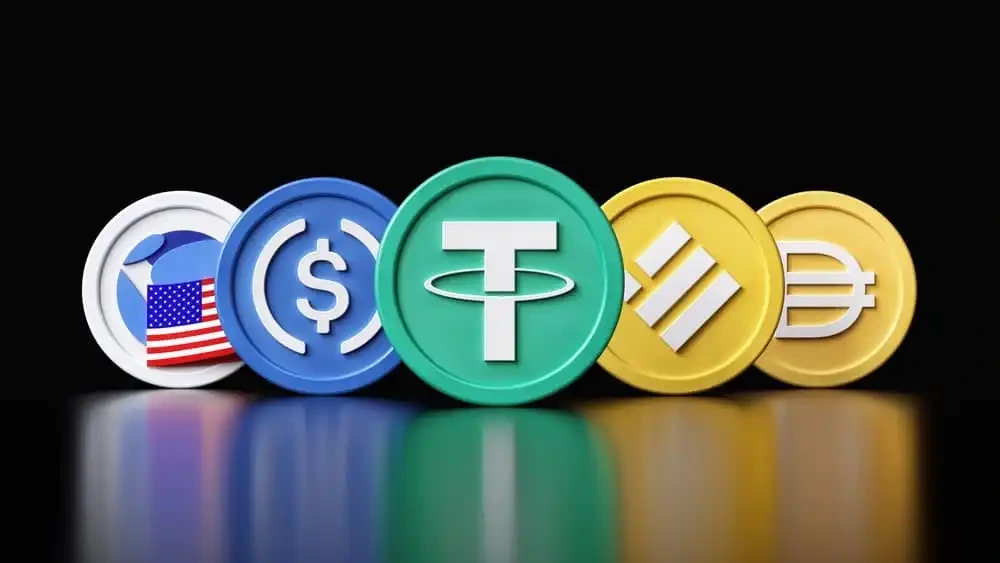
From a practical standpoint, stablecoins often serve as a bridge between digital and traditional financial systems. By pegging their value to a reserve asset, they give users confidence that they can transact and store funds without fear of sudden devaluation. This makes them an attractive choice not only for individual users but also for companies, financial institutions, and fintech platforms looking to optimize operations and reduce risks associated with volatile assets.
Types of Stablecoin Collateral
Here are the common types of stablecoin collateral:
-
Fiat currencies – the most common type of stablecoin backing. The US dollar is used most frequently, but many other national currencies are also used as collateral for their digital counterparts;
-
Precious metals. Some cryptocurrencies are pegged to the value of metals such as gold or silver;
-
Cryptocurrencies. Some stablecoins use other cryptocurrencies, such as Ethereum, as collateral. These stablecoins are usually over-collateralized to combat price volatility;
-
Other investments. Companies issuing stablecoins can often use various investments as collateral, such as commercial paper, corporate debt obligations, bonds, loans, and other “permitted investments.”
These collateralized assets are held in reserve and help guarantee that 1 USDC or USDT is always equal to 1 US dollar. Stablecoins are designed to combine the advantages of fiat and cryptocurrencies, such as the high speed, security, and efficiency of crypto, along with the price stability of fiat currencies.
How Stablecoins Differ from Other Cryptocurrencies
How Stablecoins Work
Typically, the organization or company behind a centralized stablecoin creates a reserve to safely store the asset or basket of assets that back the stablecoin. Major stablecoin issuers, such as Tether, Circle, and Paxos, undergo regular audits to ensure they have enough assets in reserve to cover the value of the stablecoins they issue.
This ensures that stablecoins are pegged to real-world assets. The money in the reserve serves as collateral for the stablecoin; therefore, whenever a stablecoin holder cashes out their tokens, an equal amount of the backing assets is removed from the reserve, keeping the peg balanced and stable.
The peg does not always remain perfectly balanced: stablecoin prices can and often do deviate from the corresponding fiat price by 1-2%, which is much less than the fluctuations of other crypto assets.
While most stablecoins are highly centralized, MakerDAO provides a decentralized approach to stablecoins and is the most prominent example. MakerDAO is governed by a decentralized autonomous organization (DAO) and issues DAI stablecoins to borrowers, ensuring that its reserve assets are always over-collateralized. Over-collateralization means that there are more assets in the reserve than the total value of the DAI supply. Maker's reserves hold only cryptocurrencies, such as Ethereum and USDC.
Maker users lock their crypto assets in a smart contract. Once the contract confirms the assets are secure, users can borrow newly minted DAI stablecoin tokens.

Additionally, there are algorithmic stablecoins that, instead of collateral, rely on algorithmic arbitrage capabilities between stablecoins and other assets to stabilize their value.
While algorithmic stablecoins might seem reliable in practice and like a great idea since they operate on supply and demand principles, it has proven incredibly difficult to correctly implement this type of protocol.
Algorithmic stablecoins have repeatedly faced implementation attempts, failed multiple times, and lost billions of dollars in customer assets. The Terra Luna collapse is the most devastating example, as billions were lost and many people lost their savings.
The historical collapse of Luna will remain one of the darkest days in cryptocurrency history. Approximately $60 billion was lost during the crash, leading to regulatory actions and panic among investors and global regulators. The project's failure led many to believe that creating a successful algorithmic stablecoin is unlikely.
Advantages and Disadvantages of Stablecoins
Advantages:
-
Stablecoin users do not need international bank accounts when sending money abroad. All that is required is a crypto wallet, and funds are sent instantly. This is a significant improvement over the slow, expensive, and prohibitively complex legacy system;
-
Stablecoins allow for peer-to-peer digital transfers without the need for third-party intermediaries;
-
Stablecoins reduce fees and shorten transfer times, as well as eliminate much of the bureaucratic red tape that often arises in international exchanges;
-
Stablecoins can be used without the need to go through a KYC procedure, which increases the level of privacy and anonymity. However, it is important to note that blockchain transactions can be traced, and centralized stablecoin transactions can be stopped and controlled due to their centralization. Despite all this, using stablecoins remains significantly more private than using the banking system.
Disadvantages:
-
If the stablecoin issuing company holds its reserves in a bank or with a third-party custodian, there is a possibility of losing funds due to bankruptcy, hacking, or other unforeseen circumstances. This creates a dependency on the traditional financial system, which contradicts the decentralized nature of cryptocurrencies;
-
Stablecoins cause concern for government authorities because transferring significant amounts from the traditional financial system into cryptocurrencies undermines control over money flows. Regulators may impose strict restrictions, leading to legal complexities or even the banning of individual projects;
-
Unlike traditional cryptocurrencies like Bitcoin, stablecoin users must trust the issuing company that manages the reserves. This violates the core principle of decentralization, as companies can unilaterally freeze accounts, control transactions, or change terms of use;
-
Many popular stablecoins, such as USDT and USDC, are controlled by organizations that can block or reverse transactions. This makes them similar to banking instruments, which contradicts the concept of financial freedom in the crypto space.
-
Problems with algorithmic stablecoins. Unlike fiat-backed stablecoins, algorithmic stablecoins like TerraUSD (UST) are subject to the risk of a “death spiral”—where insufficient liquidity leads to a loss of the peg to the base currency, mass panic, and system collapse. Until a reliable way to regulate them is found, such assets remain high-risk.
Why Stablecoins Lose Their Peg
-
One of the main reasons stablecoins lose their peg is insufficient market liquidity. Liquidity refers to the ability to quickly buy or sell an asset without affecting its price. In the case of stablecoins, when demand for the currency is insufficient, the price may start to fall, leading to a loss of the peg to the intended value. Conversely, if demand is too high, the price may rise above the intended value, leading to an over-peg. This issue is particularly common in smaller markets with limited trading volume, making it easier for large trades to impact the market;
-
Another reason stablecoins lose value is market manipulation. Cryptocurrency markets are notoriously susceptible to manipulation, and stablecoins are no exception. Some market participants may artificially inflate or deflate the price of stablecoins using large buy or sell orders, leading to an imbalance in supply and demand. These participants often engage in “wash trading”—a tactic where they simultaneously buy and sell the same asset to create an illusion of trading activity. Such manipulation can destabilize the price of stablecoins, causing them to devalue;
-
Events that undermine user confidence in a stablecoin, such as a lack of transparency in the issuer's operations or rumors of financial problems, can trigger mass selling of the stablecoin and lead to its deviation from the peg.

Popular Stablecoins in the Market
-
USDT (Tether) – a stablecoin or digital equivalent of the US dollar, developed on the Omni Layer platform by Tether Limited in June 2014. The token is pegged to the US dollar rate at 1 to 1 (during periods of high market volatility, the ratio may change, for example: 0.92 to 1). The main idea of the coin is to present the world with an asset that has all the benefits of cryptocurrency (decentralization, privacy, minimal fees) and the stability of fiat currencies. At the same time, the issuing company Tether strives to comply with legislation and adhere to KYC and AML rules in jurisdictions where it is available;
-
USD Coin (USDC) – an ERC20 standard token created by Circle and Coinbase (following the merger of the companies - Centre Consortium) in October 2018. Circle also owns Circle Invest, a service helping novice investors decide to invest in cryptocurrency. The token is pegged to the US dollar at a 1 to 1 rate. This token, like its counterparts, does not incorporate any innovative technologies, but experts are confident that its rate is much more stable than other stablecoins because the project is supported by major corporate partners: Bitmain (a well-known mining equipment manufacturer), Goldman Sachs (the world's largest investment bank), Baidu (China's leader in search engines), and IDG Capital (one of the leaders in venture capital investments);
-
DAI – a decentralized stablecoin issued on the Ethereum blockchain and managed by a system of smart contracts of the MakerDAO protocol. It differs in that it is backed not by fiat currency, but by cryptocurrency assets, primarily Ethereum (ETH), allowing DAI to maintain its peg to the US dollar ($1). To maintain DAI price stability, a collateral system is used: each issued DAI is backed by excess collateral value in cryptocurrency, usually exceeding its face value. If the collateral price drops and becomes too low, a liquidation mechanism is triggered, allowing for the maintenance of system stability.
Conclusion
Stablecoins have become a valuable tool for market access and payments, as well as an asset that can protect against inflation and currency fluctuations. Fiat-collateralized stablecoins have been proven to maintain their value over many years, with any fluctuations quickly being corrected.
Frequently Asked Questions
What is a stablecoin?
Although the term has no legal definition, a stablecoin is usually understood as a type of digital asset operating on blockchain technology. It is a cryptocurrency whose value is pegged to another currency, commodity, or financial instrument. Stablecoins possess the benefits of cryptocurrencies but without the price volatility, as their value remains more stable. Most stablecoins are pegged to the US dollar at a 1 to 1 ratio, but there are also stablecoins pegged to other currencies.
Why do stablecoin prices change?
In some cases, stablecoin prices may temporarily fluctuate by one or two percent depending on supply and demand. Over time, fluctuations tend to smooth out, and the price returns to its fixed value.
Are stablecoins safe?
Most stablecoins are considered relatively safe and can help investors protect themselves against price volatility. Many believe that the most reliable and transparent stablecoins are USDC from Circle and stablecoins issued by Paxos, as these companies are transparent regarding their reserve audits and collaborate with regulators.
Want to learn more about crypto arbitrage?
Get a subscription and access the best tool on the market for arbitrage on Spot, Futures, CEX, and DEX exchanges.

You might be interested

What is Polkadot (DOT): Overview of the Polkadot Cryptocurrency and its Future Prospects

What is Solana (SOL): Project Overview and Future Prospects

Why do stablecoins lose their peg and how can you profit from it?
