


Futures Trading: What They Are and How to Profit from Them

with ArbitrageScanner!
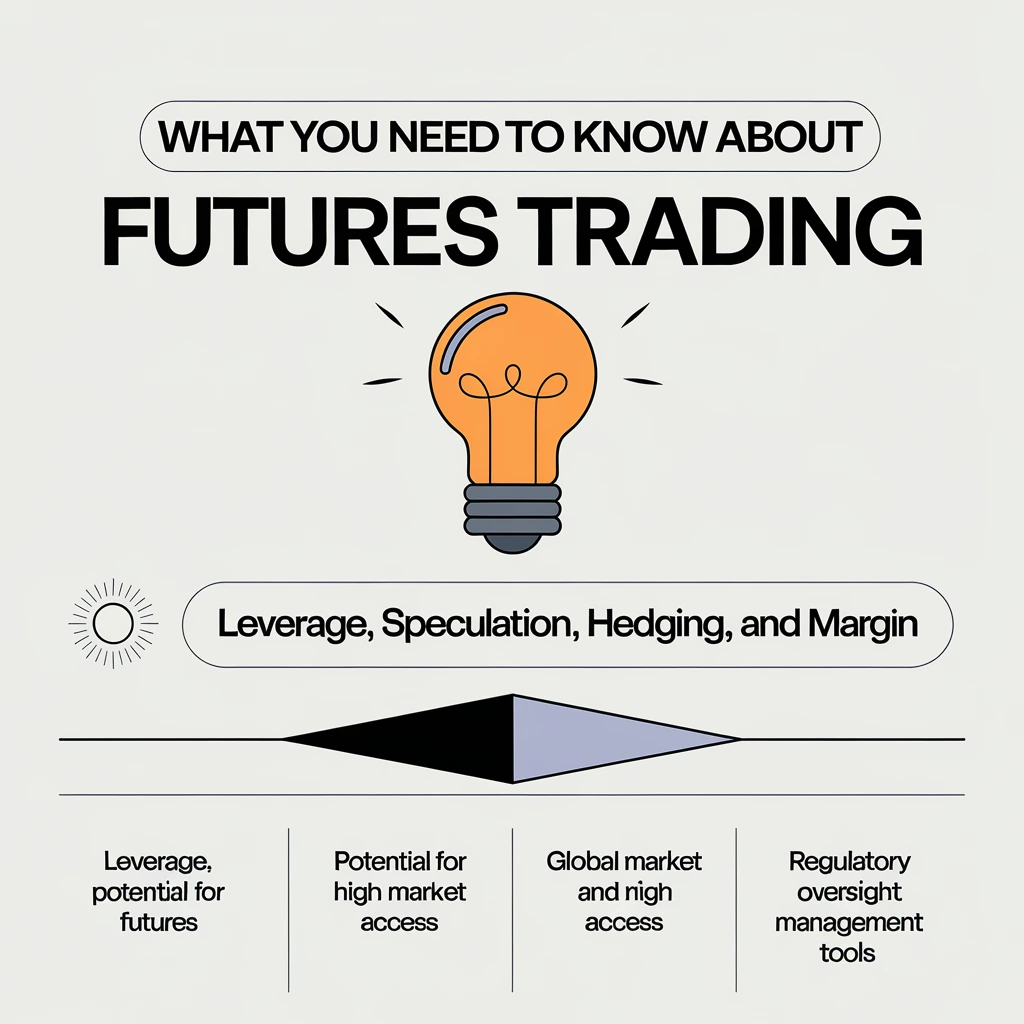
What You Need to Know About Futures Trading
The financial markets offer numerous instruments that allow traders and investors to extract profit. A futures contract is one of the core tools; however, using it requires a fundamental understanding of its underlying principles.
In this article, we will explain in simple terms what futures are, their types, and the main advantages and disadvantages of this financial instrument.
What Are Futures in Simple Terms
Think of it like buying a suit: for example, you found a suit you love, but you don't have the money right now. You can agree with the seller to buy it in 2 months at today's price. If the seller agrees, you have essentially entered into a futures contract for that suit.
The same comparison applies to business: for instance, an auto repair shop decides to expand and starts building a new facility. They found professional equipment at a great price, but they have nowhere to store it yet. The manager can agree with the supplier on a futures contract—a delivery of equipment after a certain period at the current price or a price agreed upon by both parties.
Futures are tied to underlying assets, which include everything presented on trading platforms: stocks, bonds, currencies, cryptocurrencies, commodities, and precious metals.
To sum up: a futures contract is an agreement to buy or sell an asset at a predetermined price at a specific time in the future. You cannot cancel a futures contract: once it is signed, both participants are obligated to complete the transaction.

Types of Futures
There are two main types of futures:
-
Deliverable. Upon expiration of the contract, the asset must be physically bought or sold;
-
Cash-settled. Upon expiration, the parties do not exchange the physical asset but settle the difference in cash. This type of contract is widely used on trading exchanges. Additionally, a cash-settled future can be perpetual: essentially, it is a Contract for Difference (CFD) that trading platforms once rebranded as "perpetual futures" to present it as a new instrument.
Options or Futures?
Definition
Financial markets frequently utilize two types of derivatives: futures and options. We have already covered futures; now it is time to discuss options.
Options are contracts that give you the right to buy or sell an asset in the future. When entering an option, a premium is paid because the owner has the choice whether or not to exercise that right.
Let's revisit the suit example: if the person had signed an option instead of a futures contract, they could choose not to buy the suit in 2 months and would only lose the premium paid to the seller.
Options are divided into two types:
-
Call option – the right to buy an asset at a specific price;
-
Put option – the right to sell an asset at a specific price.
Hedging with Options
Options are excellent for risk hedging. Those who know how to use them effectively do not fear market volatility because they are protected. Let’s look at an example of hedging with a put option:
An investor bought 1 BTC at $100,000. Market signals suggest a potential correction that could drop the price to $80,000. The investor buys a put option, granting the right to sell Bitcoin in 2 months at the same price of $100,000. The cost of this option (the premium) is $500.
If Bitcoin drops to $80,000, the investor exercises the right to sell at $100,000. In this case, they lose only the $500 premium but save 20% of their capital. Furthermore, by selling BTC for $100,000, they can buy it back at the lower price later, yielding significantly more profit when the recovery begins.
If Bitcoin does not drop, the investor simply lets the option expire and loses only the $500.
In the event Bitcoin rises to $110,000, the investor also declines to sell at the option price, loses $500, but the $10,000 increase in BTC value covers the cost and generates profit.
Key Features of Futures Trading
Trading futures differs from the standard spot market—where you simply buy currencies, stocks, or crypto assets:
-
Cash-settled futures cannot be held forever. Every contract has an expiration date—the day the transaction must be settled;
-
Perpetual futures often offer leverage: a trader borrows funds from the exchange to buy a larger position. For example, if a trader has $1,000 and uses 3x leverage, the trade value increases to $3,000. This boosts potential profits but also potential losses, which are deducted from the trader's $1,000. If losses reach this amount, the position is automatically closed or liquidated;
-
Perpetual futures require collateral (margin)—funds in the account used to cover losses. If they run out, the position is liquidated;
-
When buying futures, ensure your market analysis is thorough, as the obligation cannot be easily reversed.
Advantages and Disadvantages of Futures
Advantages:
-
Fixed future price. Allows buying or selling an asset at a set price regardless of market swings;
-
Profit from both up and down trends. You can open long (buy) or short (sell) positions;
-
Leverage allows for high potential profits with small initial capital;
-
Risk hedging tool. Highly relevant for businesses and investors seeking protection from adverse moves;
-
Access to diverse assets. Futures are available for currencies, stocks, crypto, commodities, and metals.
Disadvantages:
-
Obligation to fulfill the contract. Futures cannot be canceled—participants must execute the trade;
-
Risk of liquidation. When using leverage, insufficient margin can lead to an automatic position closure;
-
Complexity for beginners. Requires a deep understanding of contract mechanics;
-
Time constraints. Contracts have expiration dates and cannot be held indefinitely like stocks;
-
Potential for massive losses with leverage. Unfavorable price moves can quickly wipe out a deposit.
Conclusion
Futures in financial markets are a powerful tool for maximizing profits and hedging risks. Their flexibility allows you to profit from any market movement, providing an edge over those who only trade on the spot market.
However, futures are a high-volatility game involving leverage, where the cost of error is high. A wrong calculation or a sudden market spike can quickly reduce your deposit to zero.
If you are looking for stability and predictability, you should consider arbitrage. Unlike futures, arbitrage strategies allow you to lock in profits with minimal risk by using price differences across exchanges or between spot and futures markets.
The Arbitrage Scanner service helps find these opportunities automatically, reducing the likelihood of errors and increasing the chances of steady income. Instead of gambling on volatile futures, you can earn through precise calculations and market inefficiencies—with less stress and more confidence.
Want to learn more about crypto arbitrage?
Get a subscription and access the best tool on the market for arbitrage on Spot, Futures, CEX, and DEX exchanges.
You might be interested
Futures Arbitrage: How to Profit from Price Differences?

How to make 1000x by analyzing Smart Traders wallets
Starter Guide to Spot Futures Crypto Arbitrage
