


Who are holders (HODL) in cryptocurrency?


with ArbitrageScanner!
What is HODL and who are holders?
Financial markets are full of various terms and naming conventions that can be difficult for a beginner to understand. One of the most popular is HODL. In this article, we will explain in detail what this term means, how it appeared, the trading strategy of the same name, and much more.
History of the term HODL
In English, "Holding" means to keep or possess. That is, if someone writes "I am holding BTC," it means "I am storing BTC." In 2013, on the famous crypto forum BitcoinTalk, a user with the nickname GameKyuubi posted a message containing the phrase "I am hodling." The person simply made a typo, but it went so viral that today the term HODL is firmly embedded in the crypto industry.
As it turned out later, the forum user wrote the message while slightly tipsy and did not intend to distort the word at all. He characterized himself as a not-so-successful trader: he always bought at the highs and sold at the lows. His message "I am hodling" sounded like a cry from the soul: he had bought Bitcoin again at the peak of its growth, and immediately after that, the price reversed. Therefore, he decided that he would not sell BTC now, despite market fluctuations.
The crypto community supported this post with humor, so much so that HODL now denotes a strategy: long-term holding of assets in cryptocurrency. This term signifies the firm intentions of investors regarding a specific crypto asset: they believe in further growth, which is why they do not intend to sell the chosen cryptocurrency in the near future.
Holders in the world of cryptocurrencies
Who are holders?
This concept could be defined simply: an investor bought cryptocurrency and keeps it. But in reality, holders in the crypto world can be equated to strategists: they carefully choose an asset that they do not intend to sell for a long time. We are not talking about a few weeks or months — rather years. You have certainly read in the news that another Bitcoin whale "woke up" or transferred Bitcoins from a wallet where they had been stored for several to more than a dozen years. These holders perfectly describe the concept: they once believed in the perspective of the main cryptocurrency and are now fixing profits years later.

Every project wants its coin to be held by as many holders as possible. The reason for this is the attraction of other investors and the further development of the ecosystem. The fact is that data in public blockchains can be viewed by anyone. It is possible to track when a large holder received certain coins in their wallet. Suppose if a coin, based on information from the blockchain, has many holders, then this only speaks to the project's prospects. Thanks to this indicator, new investors who are just considering adding this coin to their portfolio can make a favorable decision and become another holder of the crypto asset.
Holder vs trader: differences in strategies
It can be said that traders and holders represent two completely different approaches to extracting profit from cryptocurrencies. As already mentioned, holders are long-distance players. They scrupulously select a cryptocurrency, and after investing, they will not withdraw their funds for at least one year.
Traders, on the other hand, act more as speculators: market movement is important to them, meaning they benefit from the volatility of crypto assets. Since trading is a generalized concept (there are different types of trading strategies), their period of cryptocurrency ownership can range from a few minutes to several weeks.
It is also worth noting the moment of analysis: holders lean more towards fundamental and on-chain analysis. This means they try to understand the future of the project based on possible partnerships, innovations, the number of coin holders, trading volume on exchanges, and other factors. Traders are more inclined towards technical analysis: it is important for them where the price will go in the near future. They can determine this by searching for patterns on the chart, market supply and demand, and the cryptocurrency fear and greed index.
Time costs should also be noted: holders select an asset once, place it in a secure wallet, and forget about it for years. Traders cannot afford such luxury: they must regularly monitor price movements and conduct analysis to find the optimal entry and exit point for a trade. If they neglect this, they do not earn.
It is impossible to choose a specific strategy that will bring more profit to a particular trader. This is an individual matter where a simple rule applies: you won't know until you try.
Impact of holders on the cryptocurrency market
Why the HODL strategy is important for the market
Let's analyze in more detail why holders are so important for the crypto market:
Long-term cryptocurrency holders create stability for the asset's price. Yes, it is quite difficult to believe because cryptocurrencies are the most volatile assets, but if holders did not keep cryptocurrencies regardless of price movements, the asset's volatility would be much greater than it actually is;
Holders can create a shortage of available coins on the market, especially when it comes to the most famous cryptocurrencies, such as Bitcoin. Today, the main cryptocurrency is being bought up by everyone: retail and institutional investors, funds, countries, and companies. In the crypto community, the opinion has long been established that sooner or later the market will not be able to offer a sufficient amount of BTC to cover investor demand;
The more holders a project has, the more incentive it has for further development. The fact is that a large number of long-term investors shows the project's creators that there is interest in it, which stimulates further development and attracts new investors who buy the cryptocurrency, thereby increasing its value.
Examples of holder impact on Bitcoin price
Since Bitcoin is the first and main cryptocurrency, we can use it as an example to analyze in detail the impact holders have on crypto assets:
As already mentioned, holders affect Bitcoin's volatility because they do not sell it during moments of market panic. In moments when panic selling is observed, large holders of the main cryptocurrency do not join them, which is why volatility remains within reasonable limits;
As historical data shows, moments when holders accumulate Bitcoins in their wallets are followed by a subsequent increase in its value. This is simple psychology: if a retail investor sees a large holder increasing their position, it only speaks to their confidence in the asset's further growth, which is why the investor also decides to purchase Bitcoin;
Resilience to panic selling creates long-term trust among market participants. For example, when a significant decrease in quotes is traced in other cryptocurrencies, Bitcoin may drop by only a few percent, which speaks to its resistance to market fluctuations;
Thus, it can be summarized that holders for Bitcoin and cryptocurrencies motivate projects to develop and stabilize the price of their coins.
Holding as an investment strategy
Holding as a strategy has its advantages and risks. Let's talk about this in more detail.

Long-term benefits of holding cryptocurrencies
If you managed to find a cryptocurrency with good growth potential in the future, then in the long term it can bring good profit. An example is Bitcoin holders. Once, the main cryptocurrency could be bought for a few hundred dollars, and today its value has already exceeded $100,000;
As a rule, holders are not afraid of short-term volatility, where traders can suffer losses. Since the focus is on long-term investing, the price most often levels out, helping to avoid financial losses;
The more holders a cryptocurrency has, the more stable its price is. At a moment of market panic, long-term holders do not get rid of the asset, thereby reducing its volatility;
Unlike trading, where you have to constantly pay commissions for transactions, holders pay only at the moment of purchase and sale, that is, twice;
Any investor can become a holder. It can be said that this strategy has a low entry threshold: it is enough to find an asset that has a clear concept, product, and support from large funds. At the same time, in trading, you need to constantly monitor the market situation.
Potential risks for holders
No matter how much holders influence cryptocurrency volatility, they are also subject to it. Again, let's take Bitcoin as an example: the asset is quite expensive today, and you should definitely not expect it to bring super profits in the coming years. There were definitely investors who bought BTC at the $100,000 mark, but today it trades in the $82 000-$87 000 range.
Legislation regarding cryptocurrencies changes quite often. The introduction of new rules and norms for crypto assets can significantly affect their value and area of application;
The security of cryptocurrencies is the responsibility of their holders. If a holder did not take care to protect their crypto wallet, then hackers can take possession of their assets. In addition, it is worth taking care of restoring access to the wallet: it is advisable to save the seed phrase on a physical medium;
If you do not store cryptocurrencies in custodial wallets, they are not insured. In case of crypto asset theft, no one will compensate for the damage;
The constant technological race can devalue your investments in an instant if a more promising project with a similar idea and product appears.
How to become a successful holder
Main tools and techniques of holding
To protect your cryptocurrencies, you need to choose the right wallet, namely a cold one: this means it does not have constant access to the internet, making it difficult for third parties to obtain the private key that provides access to crypto assets. Cold wallets include hardware and paper ones;
Use portfolio trackers that allow you to monitor the current value of your investments. You can set up notifications that will come to you, for example, at a moment of a sharp price change for a specific cryptocurrency;
You need to regularly learn current news about projects whose coins you keep in your wallet. This will help you determine whether it is worth continuing to hold the asset or if it is better to think about selling it;
To have a portfolio that is as resistant as possible to market fluctuations, you need to invest in different assets. And we are talking here not only about different cryptocurrencies but also about traditional assets. With such a distribution of investments, if one market dips, the rest of the portfolio will remain unchanged;
If you are initially confident in the long-term nature of your investments, it is advisable to conduct an analysis a couple of times a year to see if reinvestment should be made. Over those same six months, the market situation can change significantly, due to which the assets in your portfolio may not bring sufficient profit.
Top holding strategies from experienced investors
Experienced holders use various strategies to minimize risks and increase profit. Here are some of them:
DCA (Dollar Cost Averaging) – a cost averaging strategy. An investor regularly buys cryptocurrency for a fixed amount, regardless of the current price. This helps to avoid bad entry points and minimize volatility;
Holding with partial profit taking – when an asset shows significant growth, investors fix part of the profit, leaving the remaining amount in a long-term hold;
Portfolio diversification – distributing capital between different cryptocurrencies reduces risks. Holders can keep BTC, ETH, as well as promising altcoins;
Using staking – some cryptocurrencies allow you to receive passive income for storing coins in the network (for example, Ethereum 2.0, Cardano, Solana).
Future of holding and its role in cryptocurrencies
With the development of the crypto market, the HODL strategy remains one of the most popular among long-term investors. In the future:
An increase in institutional investors will lead to increased demand for BTC and ETH, which will increase the value of holding;
The development of DeFi and blockchain will allow holders to earn extra by participating in staking and cryptocurrency lending;
Regulations in different countries can change the rules of the game, so it is important to monitor legislative changes;
Technological development will create new promising projects that can compete with current market leaders.
Current trends among Bitcoin holders
Analysis of blockchain data shows several interesting trends:
The amount of BTC on exchanges is decreasing, which indicates growth in long-term holders;
Large investors (whales) continue to accumulate Bitcoins, which confirms their confidence in price growth;
A large part of BTC has not moved for more than a year, which indicates long-term trust in the asset;
The growth in popularity of the Lightning Network and other scaling solutions makes Bitcoin more convenient to use, which attracts new investors.

When is it profitable to hold?
Holding makes sense in the following cases:
Bear market – when prices fall, investors can accumulate assets at favorable prices;
Low volatility – if the market is stable, long-term storage reduces the risk of losses from short-term price jumps;
Growth in interest in cryptocurrencies – if institutional and retail investors are actively buying up an asset, its value may grow significantly in the future; It is Arbitrage Scanner that helps track the increase in the number of active addresses and the inflow of liquidity;
Bitcoin halving – historically, after a halving (reduction in the block reward), the price of BTC tends to grow, making holding a profitable strategy.
Want to learn more about crypto arbitrage?
Get a subscription and access the best tool on the market for arbitrage on Spot, Futures, CEX, and DEX exchanges.

You might be interested

What does Donald Trump buy?
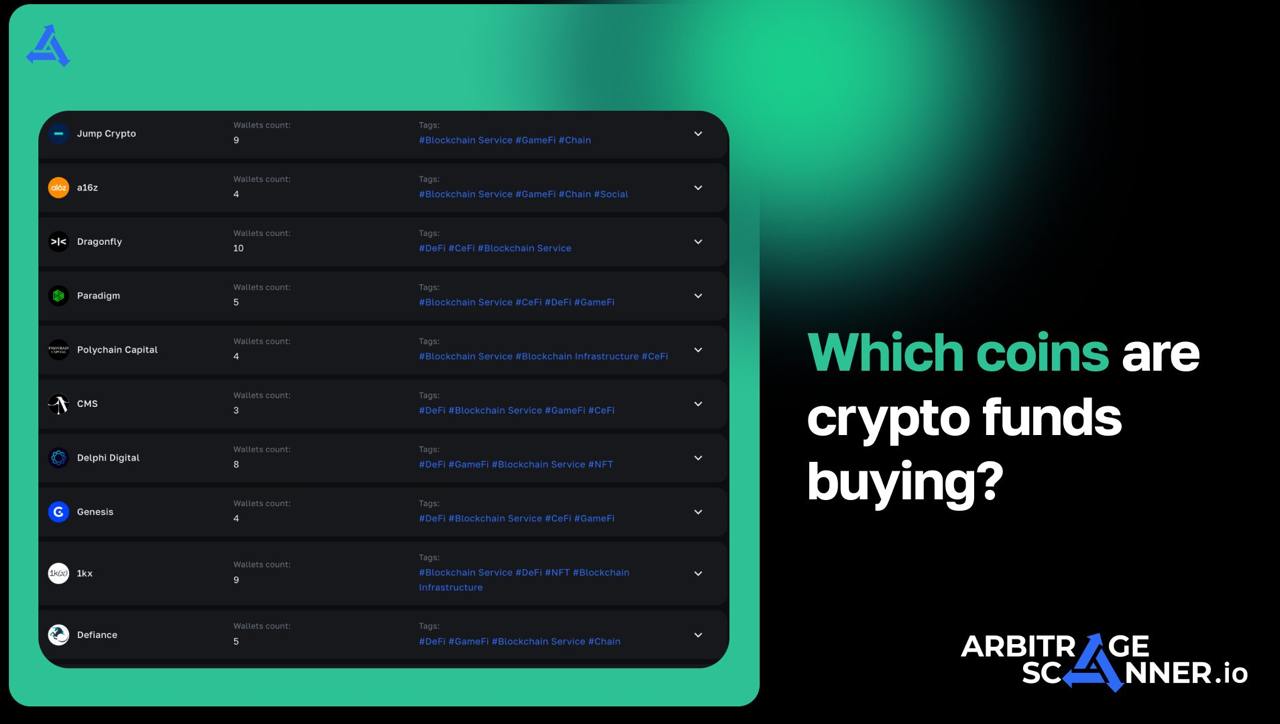
Which coins are crypto funds buying?
