


Essential Crypto Tools for Traders and Investors


with ArbitrageScanner!
The crypto market has grown quickly over past several years from an obscure hobby or a new type of currency into an advanced financial ecosystem. By 2026, the sheer volume of data, assets, and platforms in this space is overwhelming even seasoned professionals.. As such, the right crypto tools to help you filter out the noise and stay ahead of the competition are no longer optional — they are prerequisites for survival and growth.
In this guide, we will provide an overview of the various types of crypto tools available to help you improve your trading, make managing your digital asset investments easier and allow you to have the same type of precision in managing your digital asset investments that institutional investors use. From advanced charting tools to automated trading bots, we have compiled a list of the best crypto tools for you to help you make informed trading decisions.
All crypto traders and investors use a multi-faceted toolkit if they want to succeed. Each trader's toolkit should reflect their experience level and goals, ensuring adequate coverage across all key functional areas. Tools play a key role in turning raw market data into usable, actionable information.
Tool Categories Overview
Portfolio management
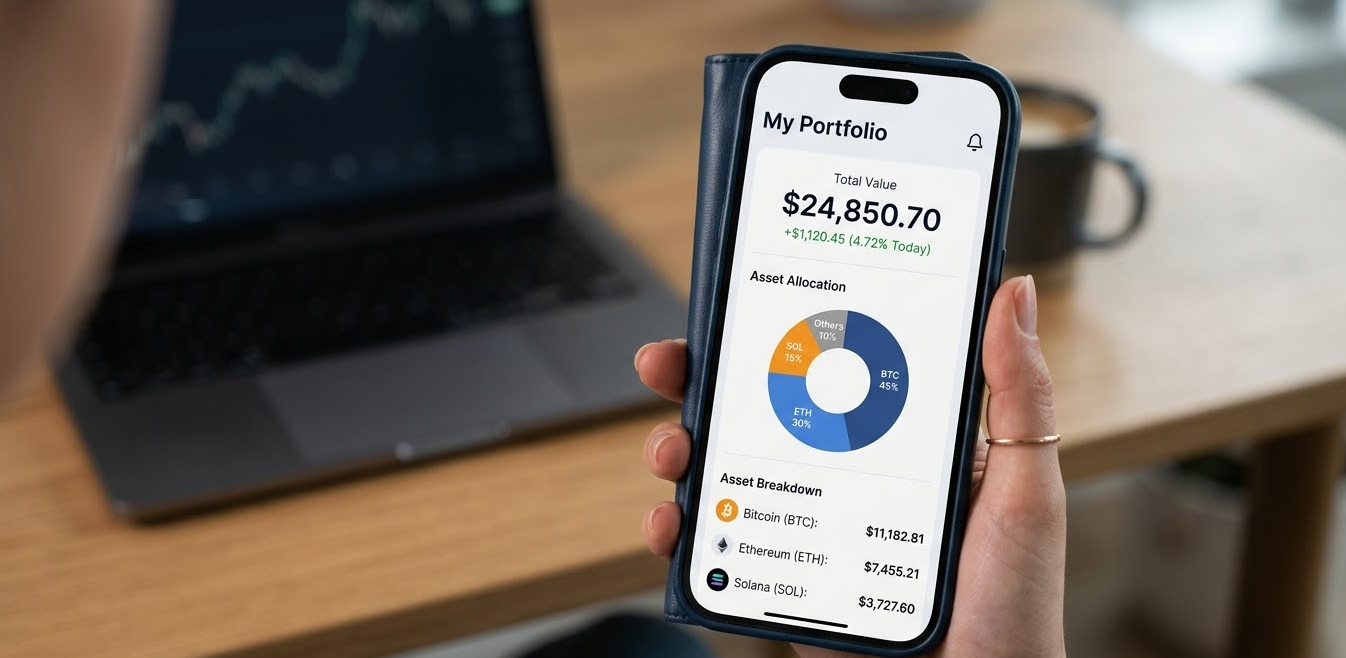
These tools can help crypto investors to manage their crypto portfolios by providing a single view of balances for all exchanges and crypto wallets in use. They allow investors to see their total net worth and total asset allocation at once.
Charting platforms
Charting software is very necessary for technical analysis. These tools provide indicators and drawing capabilities to help traders identify candlestick patterns and the most up-to-date crypto trends that exist in the market. The gold standard for charting software continues to be TradingView.
Tax solutions
Following the tightening of global tax compliance regulations in early 2026, tax reporting has become an important part of your crypto activities. A capital gains and losses calculator prepares your report for a tax professional to review.
Research tools
Cryptocurrency research resources will help provide a clearer view of the market by giving insights into market trends, social sentiment, and on-chain metrics that cannot be seen on an exchange.
Trading bots
Automated systems enable the automatic execution of trades 24 hours a day, seven days a week, based upon predetermined strategy parameters. This will help remove emotional bias and guarantee that you will always be able to react to market changes.
Analysis software
This may be tools that perform technical analysis or platforms that measure millions of cryptocurrency investors to derive a measure of levels of "fear" and "greed" across the cryptocurrency world.
Portfolio Management Tools
Many cryptocurrency investors today own coins in an exchange, like Binance or Kraken, and in numerous hardware wallets. Manually tracking all of these coins is impossible.
Tracking features
The best cryptocurrency trackers will provide the most accurate representation of your entire holding in real-time and using either API or public wallet address syncing will show the exact location of your bitcoin or just about any type of altcoin.
Performance analysis
An effective tool used to manage a crypto portfolio should not only provide the balance for that portfolio — it also will compute your percentage return on investment, profit and loss for any crypto coins and performance metrics for that crypto coin over time. This will provide the investor with clear data to assist in determining which cryptocurrencies are underperforming.
Asset management
Many advanced platforms will provide automated rebalancing of the fund by automatically moving between digital assets to keep them on level with a set risk.
Data integration
A trading platform's success will mostly rely on the number of exchanges it connects to when conducting trades. The best trading platforms give their customers the option to buy and sell from multiple exchanges simultaneously, allowing transactions to be completed in minutes rather than hours.
Analysis Platforms
Technical analysis
No one can be successful in cryptocurrencies using anything other than data-driven trading strategies and the use of Technical Analysis indicators as a guide for determining how to analyze cryptocurrencies.
Most trading platforms, including TradingView, offer hundreds of Technical Indicators (i.e., Moving Averages, RSI, and Fibonacci Retracements, among others) that allow traders to visualize market trends and momentum.
Market research
Messari and Glassnode provide an abundance of research related to cryptocurrencies, including on-chain metrics that quantify the number of inflows and outflows related to activity on the blockchain, all of which can help traders make predictions about the near-term direction of Bitcoin prior to price changes appearing on candlestick charts.
Social analytics
Social media is one of the primary drivers for trading in cryptocurrencies. By compiling social media posts about trading ideas, traders can receive information about major price movements occurring in the cryptocurrency marketplace when a particular post goes viral.
DeFi tracking
If you are involved with DeFi (Decentralized Finance), the best way to monitor and track yield farms and liquidity pools is through the use of software developed for tracking DeFi activity across multiple blockchains. Using these types of software is critical to determining if your cryptocurrency investments are generating returns at expected levels.
Trading Solutions
Automated trading
A transaction execution platform can help traders execute transactions more quickly compared to using a typical broker. One of the quickest ways to complete trades is by using a trading bot. Automated trading can utilize grid or DCA trading strategies to save you money when the markets are very volatile.
Exchange integration
Most of the best crypto trading tools support trading on different exchanges with just one API key. This allows you to buy crypto on one exchange (like Kraken) and sell it on another without having to leave your dashboard.
Strategy development
You can also find advanced charting tools that will help you to backtest trading strategies. These are historical datasets that you can use to verify your strategy before risking any money. Therefore, these tools are critical to long-term success.
Risk management
It is important to manage losing trades as much as winning trades. Therefore, using stop losses and take profits on multiple exchanges is standard with all of the top crypto trading tools.
Implementation Guide
Once you know which tools exist, it is important to learn how to use them. Therefore, beginners and advanced traders should follow a structured set-up process.
Tool selection
Determine your needs before proceeding with crypto tools. Are you investing long-term or a day trading? If you have a long-term investment, a crypto portfolio tracker may be sufficient. If you are a day trader, you need technical analysis tools with fast integration.
Setup process
To set up your account on most platforms, you will have to verify your email address and create 2FA. When connecting your trading or exchanging account to any of these platforms, always make sure to use “Read-Only” API Keys unless you are using a trading bot (or similar) that requires you to have “Trade” permissions.
Integration methods
There are many tools for traders and investors to use for all their trading activities and documentations, either in the form of browser extensions or mobile applications. Always be sure that you have a compatible crypto wallet with the analytical tools you choose to use so that you will have access to live feeds without delay.
Best practices
Always keep security first: Use a hardware wallet to store a large number of coins.
Avoid over-complicated systems: If you use more than one indicator, you'll create an "analysis paralysis" situation.
Review your reporting on a monthly basis for taxes to prevent being caught off guard at year-end.
Follow current trends by researching the top reported articles from a reputable team of analysis.
Conclusion / The Bottom line
In the fast paced world of cryptocurrencies, through the use of integrated tools for portfolio management, technical analysis, and automated trading, you'll have an efficient and profitable trading experience. The key to being successful is not only the exchange you use, but the full spectrum of the tools and platforms available to integrate into your trading philosophy.
FAQs
How to choose the right combination of crypto tools for different trading styles?
You should find that individuals who are swing traders may prefer to use more advanced charting tools with alerting systems; while individuals who are long-term investors in cryptocurrencies will have an emphasis on crypto portfolio trackers and/or crypto tax reporting software. Regardless of if you are a novice or experienced trader, each trader should ideally start using one type of tool in each category to keep things simple.
What security features should traders look for in cryptocurrency tools?
You should always be in the habit of looking for any platform/tool that has 2nd-factor identification (2FA), works with a hard wallet, and allows you to use limited-access API Keys. The functionality of your interface should not be compromised because of concerns for the security of your digital assets.
How to integrate multiple crypto tools effectively for better trading?
Effective integration can be achieved through the use of an aggregator that allows you to trade on multiple exchanges. By linking your exchange accounts through their API to a central dashboard (i.e. 3Commas or CoinStats), you'll have visibility into all your trading activity.
Which tools are best for beginners versus experienced traders?
A beginner should use an easy-to-use platform, such as Coinbase for buying crypto and CoinStats for tracking; while an experienced trader should take advantage of TradingView's technical analysis indicators and automated trading bots such as HaasOnline.
How to maximize the benefits of automated trading tools safely?
You can get the most benefits from your automated trading by not simply using a "set and leave" methodology in relation to your bots or automated trading solutions. You will need to frequently review your trading strategy to ensure that you are executing against current market research and latest trends in the cryptocurrency market. You should also utilize back-testing features of your automated trading solutions to confirm the robustness of your trading strategies prior to executing them on live capital.
Want to learn more about crypto arbitrage?
Get a subscription and access the best tool on the market for arbitrage on Spot, Futures, CEX, and DEX exchanges.
You might be interested

Technical Analysis Mistakes to Avoid in Crypto Trading

Buying and Selling Altcoins: Complete Guide

Falling Knife in Crypto: Proven Buying Strategies
