


Paper Trading: Risk-Free Way to Learn Crypto Trading


with ArbitrageScanner!
The digital wild west of Cryptocurrency has made novice traders feel lost when they attempt to trade due to the volatility and 24/7 market cycles; because of this, many wait until they feel ready by trading before really gaining experience with the market. Fortunately, paper trading has allowed novice traders to learn the market without risking one penny with real dollars.
Understanding Paper Trading: Concept and Simulation
The Basic Concept
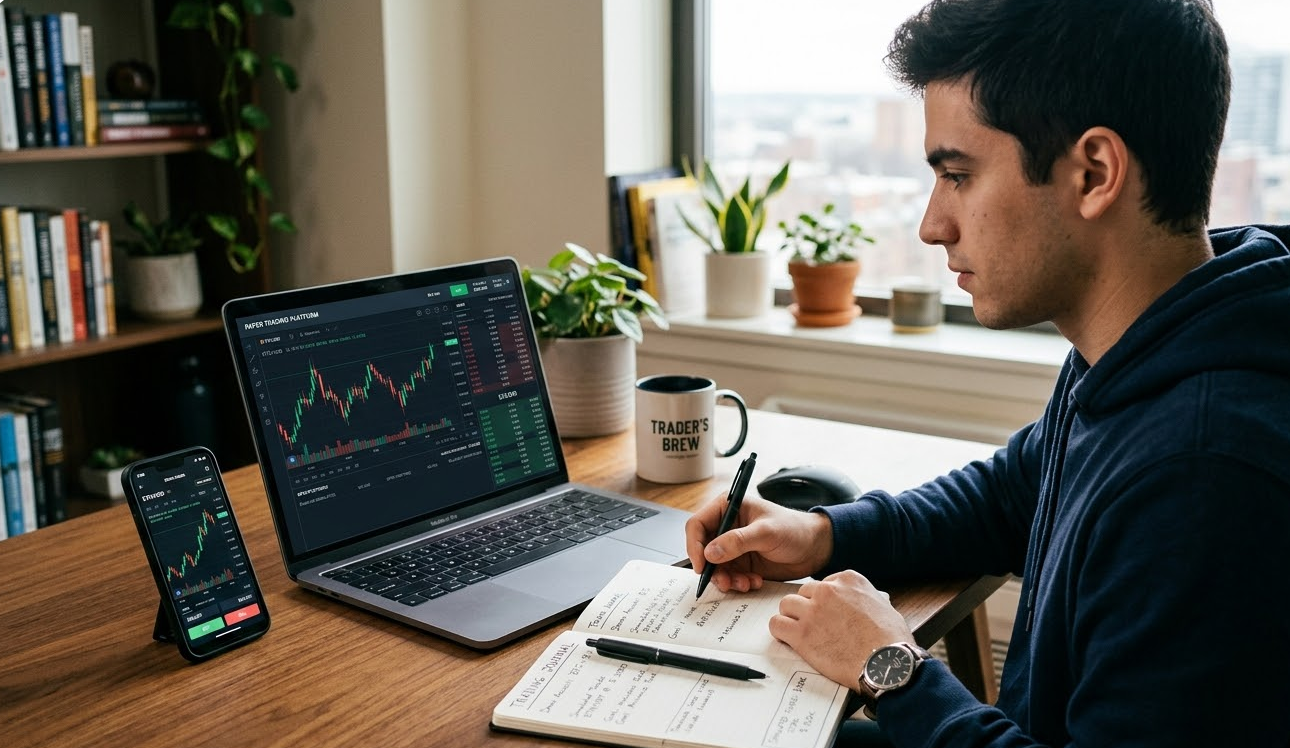
So what is paper trading and how can it help novice traders? To start, the main goal of paper trading is to simulate the actions of an investor without actually investing using real money. A long time ago, you would simply write down trades on a piece of paper, and then keep track of that paper with how that stock fluctuated in price. Now, the simulation has gone completely digital, using a sophisticated crypto trading simulation software (or demo accounts via exchanges).
Market Simulation and Implementation
There are a lot of demos that will paper trade for you using the same live market conditions as you would if you were using real money (order books, real-time price fluctuations, and technical indicators). When you create a paper trading account, you will use the paper trading account to execute trades, and as each trade executes, the respective software will create a profit or loss based on the actual market environment with a virtual balance of "play dollars" in your paper trading account. Therefore, for all intents and purposes, the paper trading platform constitutes a laboratory to test out trading strategies with no financial risks—just time and effort.
Key Advantages of Paper Trading
The first major benefit of paper trading is that it eliminates the financial risk of trading. The benefits of paper trading are much more than just monetary savings:
- Practical Experience: An individual gains real-life experience of the trading process in a live marketplace through paper trading, from placing a stop-loss order to evaluating how different cryptocurrencies respond to news headlines.
- Creating Strategies: Testing a hypothesis on a virtual account to see if a particular trading method will work gives traders the opportunity to experience trading systems before they put up real money.
- Training for Emotional Discipline: Although replicating the emotions of anxiety and greed that come with trading in real-time is impossible with paper trading, using paper trading can help traders develop emotional control and maintain their trading plans adequately during market downturns.
- Learning to Use the Platform: Every trading platform has a designed user interface. By utilizing the paper trading features, a trader will become accustomed to the specific functionality of a trading platform before transitioning to live trading, reducing the chance of making an expensive mistake due to fat-fingering (accidental misclicks or wrong inputs).
Drawbacks and the Psychological Gap
Although the use of a paper trading simulator is valuable, it does not simulate all aspects of the live experience. As an example, the absence of emotional impact caused by trading with real money can create a void; the fear and panic associated with a declining market will cause your heart to race and impair your judgment, which are sensations that cannot be fully replicated through the use of virtual funds.
Additionally, there are also some differences between the technical components of paper trading versus regular trading. For example, within a simulated trading environment, all of the trades will be executed at the precise time and price; however, in a true live trading environment, traders typically experience slippage when executing their trades because there may not be sufficient buyers or sellers willing to execute a trade at the specified price when the time arises for execution. Also, when you paper trade, you trade in isolation and your own trades do not impact the market's overall volume. In contrast, high-volume crypto derivatives or spot markets will be impacted by your trading volume as there is much larger competition for the same trades.
Best Practices for Effective Paper Trading
In order to maximize the value of your paper trades, it is imperative to treat your virtual accounts with as much seriousness as you would real accounts. If you intend to start trading with $1,000, then you should not use your simulators to have a balance of $1,000,000. Ensure that you keep your virtual account balances in line with your financial capability when trading with one of them.
Be consistent. Use your trading journal to keep track of your wins/losses as well as to document the reasoning behind all of your trades. After a significant period of time (at least between 1 - 3 months), analyze your trading volume and percentage of winning trades (as well as those days of the week when you did not win or lose) before moving to real funds. It is important to remember that your previous successful paper trades are not an assurance of your success in the real-world. However, those paper trades do demonstrate that your trading style has potential.
Step-by-Step Implementation Guide
Are You Ready To Begin? To set up your simulated trading account please follow these three steps:
- Find a trading platform - Use TradingView or other crypto paper trading platforms for charting and analysis. Use demo accounts on the top crypto exchanges including Binance, Bybit, or OKX.
- Clarify your intentions - Do you want to learn how to trade Bitcoin futures or spot? Establish specific areas of focus for each paper trading session.
- Prepare Your Environment - Utilize tools such as Fibonacci levels, RSI, and MACD indicators to help you develop appropriate trading strategies.
- Establish and track positions - Based on your research and while using your paper trading account, open positions and monitor performance as the trading day unfolds.
- Assess your performance - At least once per week, go back and analyze your entire week of trading. If a certain strategy fails to generate successful outcomes consistently, change it or work on developing an alternate strategy.
Conclusion: The Bottom Line
Trading on paper provides an excellent way to learn about trading without any financial risk. It's the bridge that connects your theoretical knowledge of trading to your actual expertise and experience as a trader using the tool of a paper trading simulator. Paper trading will allow you to enhance your trading abilities, develop confidence, and create a strategy that you can carry into the cryptocurrency markets, though it will not provide you with the same adrenaline rush you would experience if you were investing real funds in the cryptocurrency markets. However, a paper trading simulator does give you the safest and most intelligent way to test your trading strategies before you decide to invest in the cryptocurrency markets and dive into the deep end.
Frequently Asked Questions (FAQ)
How long should a beginner practice on paper trading before actually investing real capital in cryptocurrency?
Most experienced traders state that a beginner should practice at least 1 to 3 months of consistently profitable trading to gain an understanding of all three different types of trading activity and the different trading strategies which can be used in those trading conditions (up trending, down trending, and sideways trending).
What performance metrics should I track during my paper trading sessions?
You should track your win rate, profit factor (the amount of gross profit generated from your trades compared to gross losses), and maximum drawdown (the largest decline from the peak to the bottom of your account balance).
How do I simulate different trading market conditions during paper trading?
Simulators use live data as they exist in the present trading time; therefore, you can use backtesting tools to simulate different market conditions through replaying historical data from prior market conditions (e.g., bull, bear, etc.) to practice responding to those conditions in the future.
What should be the appropriate starting balance for my paper trading practice?
Your initial paper trading balance should be the same as the amount of capital you plan to start with when you actually begin trading. This keeps your position size and risk management calculations meaningful.
What is the proper way to move from paper trading to actually trading real money?
Begin live trading by using only 10% of your intended total capital for the first several weeks. By using only a small percentage of the total capital that you plan to use when trading real money, you will help to increase your emotional comfort level with having "skin in the game".
Want to learn more about crypto arbitrage?
Get a subscription and access the best tool on the market for arbitrage on Spot, Futures, CEX, and DEX exchanges.
You might be interested

Supply and Demand in Crypto Trading: The Ultimate Trader's Playbook

Essential Cryptocurrency Trading Tools: Complete Guide
Understanding Bid-Ask Spread and Slippage in Cryptocurrency Markets
