


How to Lock in Crypto Trading Profits: Key Strategies

with ArbitrageScanner!
In the fast-moving world of digital assets, having "paper profits" in your digital portfolio is one thing and capturing those profits through securing crypto assets is another. Cryptocurrencies are a very volatile market and a 20% gain can disappear within minutes. For traders to thrive and survive, they need to be able to think beyond the “HODL” mentality and come up with an exit plan for their trades. This article will show you two of the best strategies to secure your crypto profits: a Fixed Take-Profit Order and a Trailing Stop-Loss Order, so that you can effectively navigate the crypto space like a pro.
Fixed Take-Profit Strategy – The Disciplined Investor
A Fixed Take-Profit Order is an order to sell a token when it reaches a specific predetermined price - this is the foundation of technical crypto trading (removing emotion and focusing on risk-reward).
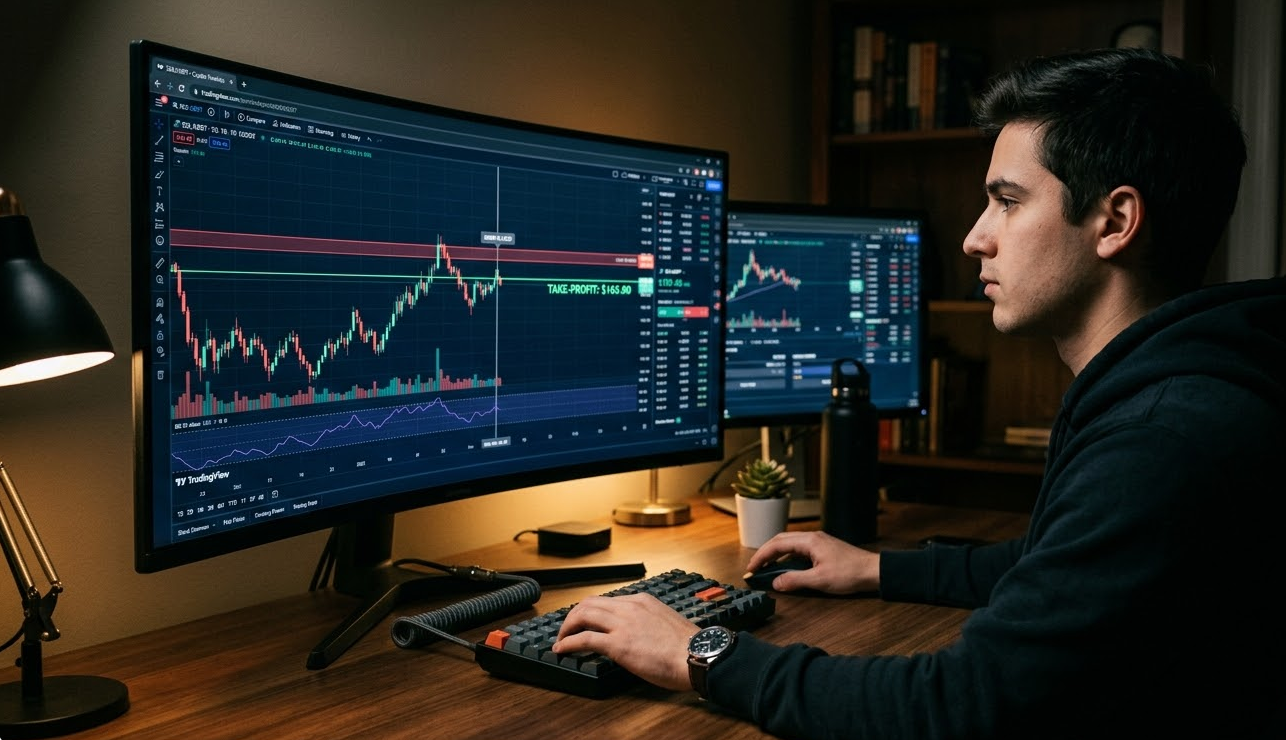
What is a Fixed Take-Profit Order and How does it Work?
When you buy a token, you set a predetermined price for selling that token. An example would be when you buy Ethereum at $2,500 and set a fixed take-profit order at $3,000. At the time the market's live price reaches the established take-profit order the cryptocurrency exchange will automatically execute that sell order for you to close the position, regardless of the market sentiment on continued price movement.
How do you Implement Take-Profits?
- Charting: Set take-profit orders based on historical resistance levels or Fibonacci levels.
- Percentage: Calculate a fixed percentage of gain (e.g. 10% or 15%) relative to the original purchase price.
- Market Caps: When trading new memecoins or low cap crypto, traders often set take-profit orders when the market cap of the coin hits a certain round number.
Pros and Cons
The biggest pro of using a fixed method is you will know what you're going to get (you won't have to be greedy!). The biggest con is that your fixed take profit will result in missing an opportunity for additional profit or "opportunity costs" by taking profits just before a particular crypto continues to rise after you exit the trade. This method will be most practical when there is limited volatility and/or range-bound price movement.
The Trailing Stop-Loss Method - Riding the Trend
While discipline is the driving force behind the fixed-profits methods, the trailing stop-loss (TSL) method is built on the need to be flexible. The idea behind the TSL method is that you can "lock" in profits while allowing yourself to keep your position open if/when the price of that crypto currency continues to increase.
What is a TSL?
A TSL is a type of order that continually follows the price action on your chart. You can define the TSL in different ways, such as by using a percentage distance and/or a fixed dollar amount away from the current price on your chart. For example, if the current price of the token is $100, and you create a TSL with a trailing distance of 10%, your TSL would start at $90 and would track the price of the token as it increases, but if/when the price decreases from an all-time high or greater, the TSL would remain at its highest level, thereby creating a rising floor of protection for you from any decrease in your staking rewards and/or your initial capital investment.
Implementation Example
A trader will set a "trailing distance" for their particular trades. A typical trailing distance range would be from 5%-10% to accommodate the volatility of cryptos. For example, if you have a token and you lock it in at $100 and set a TSL of 10%, your TSL or "stop-loss" will begin as $90. If the token increases to $150, the stop-loss automatically increases to $135. If the token drops to $135, your TSL will "stop" you out at $135, thus providing you with a $35 profit per token.
Advantages And Disadvantages Of Each
The benefit of capturing rare cryptocurrency spikes over short periods is evident when a cryptocurrency returns 10X or 5X. A downside to this is that due to noise in the market (high trade volume), a sudden price drop could trigger the stop-loss early before the price resumes its upward movement on the chart.
Comparing Strategies
To determine which strategy to use, begin by evaluating your tolerance for risk and the latest crypto news potentially affecting market conditions. The following is a comparison of fixed take-profit versus trailing stop-loss:
| Feature | Fixed Take-Profit | Trailing Stop-Loss |
|---|---|---|
| Market Conditions | Sideways / Range Bound | Strongly Trending / Bull Markets |
| Impact On Emotions | Very Low (automated) | Moderate (requires patience) |
| Maximum Potential Gain | Targeted Amount | Limitless Price Increase |
| Risk Management Capability | High (ensures exit) | Moderate (risk of slippage) |
In terms of safety in a decentralized market with varying liquidity, fixed target take-profits provide a degree of safety for trade pairs with lower volume, while trailing stop losses are more useful for major cryptocurrencies (e.g. Bitcoin or Ethereum) that see greater acceptance because they benefit from cycles of growth due to broadening blockchain adoption.
Practical Implementation
Effective Implementation Of Take-Profit Levels
To lock in profits from the sale of your cryptocurrency, it's important to use accurate information. Using a site such as CoinGecko to analyze an asset's historical prices and circulating supply will give you a strong foundation for planning your exit strategy. It is also crucial to understand the tokenomics of the asset; knowing the maximum supply and total enterprise value is important in developing realistic price points based upon the market cap value of the asset (the market cap is calculated as the token price multiplied by the circulating. If your desired price means that the market cap will have to be greater than Bitcoin's then you may want to reconsider your price target. Use a price tracking app or site to see what the current trading volume or 24 hour market data is to see if enough of that volume is available to allow you to sell your order without large amounts of slippage.
Setting Trailing Stops
Before using these types of exchanges and whether or not the exchange offers native trailing stops you should verify if they have a feature to set a manual trailing stop for you. In those cases where a manual trailing stop is required by an exchange you would want to adjust your stop every 24 hours based on price volatility over the last 7 days. Follow this guideline: The more volatile the price movement of a trading product, the more of a wide trail you will need to come up with your stop value.
Utilizing Advanced Tools
If you are interested in news regarding Houdini Swap and other similar products and want to use platforms with privacy certifications and cross-chain efficiency then this would be the best option for you. Platforms with live prices and today’s news will help improve your ability to change your trading and take advantage of any shifts in market conditions or trends. You should also verify the total supply of any coins traded on that day (therefore check how many coins are currently locked up by insiders sites) otherwise you could wake up one morning and find the price of that coin had fallen dramatically due to previous locked coins. The market cap and the theoretical market cap are only numbers until you lock the value of your trade into a stable asset or fiat.
The Bottom Line
To be successful with your trades, always check CoinGecko’s website every day for updates on the latest crypto-related news, and ensure that you have an exit strategy to prevent profitable trades from becoming unprofitable.
Common Questions
What are the differences between fixed and trailing stop loss strategies based on different market environments?
If the market is bearish or choppy (sideways), fixed take-profits typically perform better; in this type of market, prices will hit resistance and immediately pull back. However, during a parabolic bullish market, trailing stops are usually superior because you can remain in a trade for the duration of the “moon mission.”
When should I use different percentages for trailing stops based on widths of the volatility?
You can typically set trailing stop percentages of 5-7% for stable cryptocurrencies such as Bitcoin and 15-25% for a volatile memecoin or low-cap token to avoid getting stopped out due to normal price movements over any 24-hour time frame.
What is the best way to combine fixed and trailing take-profit strategies in one trade?
Some expert traders use a hybrid strategy by selling 50% of their original position at a fixed profit target (to cover the initial investment) and leaving their remaining 50% in a trade with trailing stop loss targets for potential upside profit after the first trade is sold.
What are the best practices for establishing profit taking levels in trending markets?
Utilize a “scale out” approach with multiple take-profit levels (for example, sell 25% of your position when the coin hits $110, take another 25% when it hits $120) as opposed to closing the entire position at once. Make sure to verify that your take-profit levels are located at resistance levels that you can identify on the price chart of the asset.
What is the best way to establish rules for profit taking on cryptocurrencies?
You must take into consideration liquidity and volume when establishing a profit-taking strategy. For example, if the trading pair (for instance, ETH/LTC) has a high volume on a cryptocurrency exchange, then you would typically be able to set stops closer to the buying price; however, if a trading pair has low volume on mostly decentralized exchanges, then your stops will need to be wider because these exchanges will experience more volatility for the price movements.
Want to learn more about crypto arbitrage?
Get a subscription and access the best tool on the market for arbitrage on Spot, Futures, CEX, and DEX exchanges.

You might be interested

Supply and Demand in Crypto Trading: The Ultimate Trader's Playbook

Essential Cryptocurrency Trading Tools: Complete Guide
Avoiding Common Technical Analysis Mistakes in Cryptocurrency Trading
