


Avoiding Common Technical Analysis Mistakes in Cryptocurrency Trading

with ArbitrageScanner!
Technical Analysis (TA) is sometimes called the language of the market. As a Cryptocurrency Trader, mastering this language will allow you to make smart decisions as opposed to just playing the Volatility game with no strategy or plan. However, the most powerful tool can sometimes be the most damaging when misused. When dealing with the high stakes of Cryptocurrency (where price changes at the snap of a finger), it is vital for you to avoid Technical Analysis errors in order to preserve your capital.
Understanding Technical Analysis
What is Technical Analysis? Technical Analysis is based on the study of historical price and volume patterns in an effort to predict future movement. In contrast to Fundamental Analysis, which measures the intrinsic value of an asset, TA assumes that all facts (or "information") have already been incorporated into the chart prior to the determination of future prices. The foundation of TA consists of 3 basic principles: The market discounts everything, price movement will be in trends, and history will typically repeat. Technical Traders seek to find recurring patterns in the market using Technical Analysis in order to create a competitive advantage over Retail Investors.
Analysis components
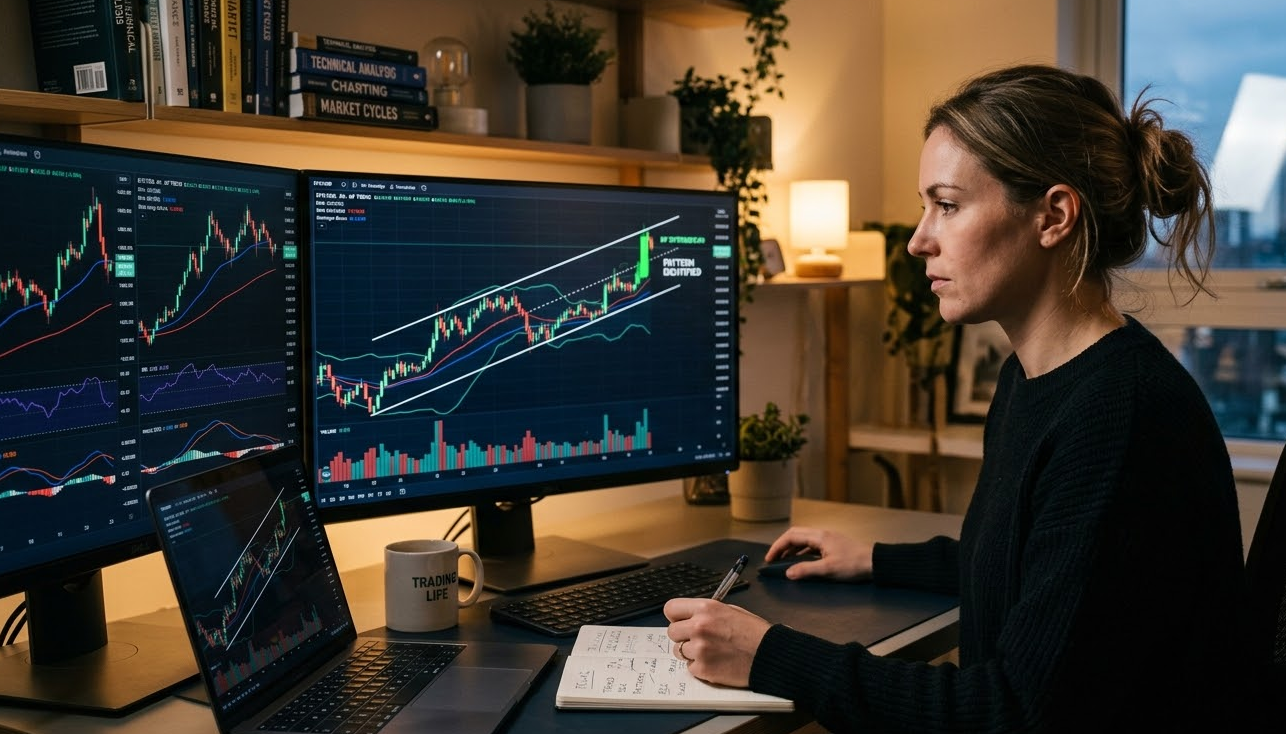
Core components used in TA include Price Action, Volume, and Timeframes. The Technical Analyst will use these components in conjunction with each other in order to establish Support and Resistance levels. By having a good understanding of all 3 components, a trader can use the data to determine where the stock or Cryptocurrency will likely move, assuming an absence of outside influences.
Tool applications
Examples of tools used in Technical Analysis are Moving Averages and Fibonacci Retracements. These tools (along with others) can be used by Traders to filter out the noise in the market, helping them to make decisions based on Momentum instead of guessing.
Market psychology
Psychology of the Market: Candlestick patterns and head & shoulders can be viewed as representations of collective psychology; they are simply maps of human emotions (greed and fear) in the market place. Successful traders can recognize changes in market psychologies before others do.
Decision framework
A solid decision-making framework uses multiple analysis points to arrive at an overall conclusion. Rather than simply depending upon one trader's opinion, you'll look for "confluence" or agreement among several indicators before entering into a trade.
Critical Mistake №1: Poor Risk Management
Stop-loss importance
Common Mistake 1: Not Managing Risk. The primary reason traders lose money is not because they make trades using poor charts, but actually because they have made trades using incorrect math; if you can't manage risk properly, you can have a 70% winning trade record and still blow your entire account. Importance of Stop Losses: Having a stop-loss order in place before you enter a trade is non-negotiable. A stop-loss protects you from extreme price fluctuations. A large percentage of experienced traders fail because they hope they will get their money back after a large drop in price — and thus watch as their drawdown turns into a complete loss.
Capital preservation
The goal of successful trading is to be able to stay in the game. You should never risk more than 1-2% of your overall trading capital on any single trade; by doing this, you'll be able to weather a number of consecutive losses without going out of business.
Position sizing
Position size should be determined by the distance from your stop loss; the greater the volatility, the smaller the position size to maintain a consistent level of risk.
Risk calculation
Calculating Your Risk: Before entering into a trade, calculate your risk/reward ratio. You should aim for a minimum of 1:2, which means that if you risk $100 on a trade, you want to make at least $200 on the winning side; therefore you would only need to have a winning percentage of 34% in order to profit over time.
Implementation strategies
Using Automated Trading to Implement Strategies: Use pre-established exit rules to execute automated trading systems. By removing the "human element", this also removes another common mistake that many traders make: moving the stop loss further away from where it is now as they get closer to it.
Critical Mistake №2: Overtrading
Position management
Critical Mistake #2: Overtrading. Overtrading is a deadly disease; a trader feels as if they need to always be in the market, this leads to divided attention, and, in turn, costs go up. Position Management: Managing more than just a few positions at one time makes it difficult to monitor trend changes properly.
Focus dilution
Many traders find that focusing on two to three trades with a large degree of confidence will yield better returns than 10 trades that are not nearly as confident as the others.
Capital allocation
Capital Allocation: When you spread your capital too thin, across too many markets (i.e., too many different stocks, etfs, and cryptocurrencies), this will affect the amount of profit from your winning trades. The key to capital allocation is being efficient.
Analysis overload
Analysis Overload: Using too many technical indicators (for example, using 10 different candlestick patterns plus 10 different oscillators) creates conflicting signals, creating indecision this is sometimes referred to as "analysis paralysis".
Strategy optimization
A trader needs to ensure their activity is focused; overtrading leads to a lack of strategy optimization where quantity replaces quality of analysis.
Critical Mistake №3: Emotional Trading
Psychology impact
Critical Mistake #3: Trading With Emotion. Emotion is very detrimental to trading using technical indicators. FOMO is why most retail traders buy at area of resistance. Psychology: When a trader sees the latest news necessarily causes a spike in the market, it typically triggers an emotional reaction.
Revenge trading
Revenge Trading: After experiencing a loss, many traders feel pressured to "get their money back" as quickly as possible. This often results in an irrational behavior of buying and selling without any confirmation from an indicator.
Decision making
A trader needs to stick to their trading plan and avoid getting caught up in all of the excitement.
Recovery strategies
Recovery Strategies: When you feel like you are too emotional to trade, take a break from the chart.
Mental discipline
Most successful professional traders implement a "cooling down" period after a large loss to maintain mental discipline.
Critical Mistake №4: Strategy Inflexibility
Market adaptation
Critical Mistake #4: Rigidity in Strategy. If you are implementing a strategy that has worked well in an up trending market define when it is no longer possible to track a movement.
Strategy evolution
Every week, you should observe your trading activity; are you still validating your entry and exit points?
Condition analysis
There are times that a stock price has no movement, and at these times, RSI and other oscillators/momentum measuring tools are generally more useful than any moving average calculations might be.
Implementation flexibility
If your edge exists, you will be able to continue your trading activity; if not, you will not trade. Implementation requires adjusting to the current landscape.
Performance monitoring
Monitoring performance means asking: are you still following the logic that originally provided your edge, or has the market moved past your current method?
Critical Mistake №5: Market Sentiment Oversight
Sentiment analysis
Critical Error #5: Underestimating Market Sentiment. Even though technical indicators may indicate a bullish trend in the market through the use of technical analysis, any change in an asset's fundamentals or significant world event could make the technical indicators irrelevant.
Indicator integration
Assessing Market Sentiment: If there is a significant event that motivates a major trader to change their trading methods, or if a major hack has occurred to break the protection on a trading method, the stock price would not remain within a support zone.
Psychology understanding
Understanding the collective psychology behind sentiment shifts is crucial when indicators are giving false signals due to external macro events.
Signal validation
Validating Signals: Validation of any signal should be confirmed through volume. If there is no volume associated with a breakout, it may be a bull trap if volume fails to develop, therefore, the volume would be confirmation of whether the technical indicators were valid.
Decision framework
You should always check the economic calendar for any changes that could affect the stock market before you buy or sell stock.
Critical Mistake №6: Technical Analysis Misconceptions
Tool limitations
Critical Error #6: Misunderstanding Technical Analysis. A large number of traders believe that technical analysis is able to predict the price levels of stocks and other assets will move before they occur; this is incorrect. Limitations of Tools: Technical Analysis provides value through probabilistic measurements based on statistical calculations.
Analysis framework
However, Technical Analysis will tell a trader that there is a probability of an event happening, but not necessarily that an event is going to occur.
Signal interpretation
Interpretation should always be grounded in probability rather than certainty. Traders often mistake a signal for a guarantee.
Validation methods
Validation requires understanding that indicators are lagging or coincident, not leading predictors of the future. Because the Technical
Implementation approach
Implementation must account for the fact that TA is a tool for risk assessment, not a crystal ball.
Critical Mistake №7: Lack of Strategy
Development process
The seventh critical error is the lack of a strategy. For instance, if you are trading on the market, then having a system for defining when you will enter & exit the trade will keep you from failure.
Strategy components
Components of a Strategy: To create a day trading or long-term investing plan, you have to define:
Implementation plan
When you will trade (to the day or longer) and what constitutes a signal for entry (or exit). How you will make $ with your trades (i.e., by implementing trailing stop orders).
Performance tracking
Ways to Optimize: Every time you trade, write down the reason for that trade, your analysis for the trade (and what you based the trade on) and any logic you used to come up with that trade.
Optimization methods
In reviewing your journal, you can see things you have tried before and did not work out, so you can no longer try to do those things, and you can repeat the things that did work out.
Prevention Framework
Analysis methodology
Preventative Framework: You can create a roadmap for avoiding issues associated with using technical analysis. Validation: Use two or more different indicators to validate price patterns.
Risk management
Risk Check: Before making a trade, make sure you have determined your risk management parameters.
Strategy development
Backtesting: Review the previous trading history of the selected trading product to see if your changes have produced profits or losses in the past.
Performance monitoring
Consistently check your strategy against current market results to ensure ongoing viability.
Continuous learning
Maintain a mindset of continuous improvement to adapt to the evolving crypto landscape.
Implementation Guide
Tool selection
Guide to Implementation: First, you should discover the best trading tools for trading cryptocurrencies (currently Trading View).
Strategy development
After discovering which trading tool(s) you are going to represent within the markets that you are trading in, you should learn how to implement both resistance and support into your trades (both will be two of your most powerful trading tools).
Risk control
Additionally, you should stay current with market news concerning the cryptocurrencies you are trading in because both money managers and technical analysts use those three tools above to help them stay on top of the markets.
Performance tracking
Keep detailed records of how news and technical signals interact to track the accuracy of your system.
Improvement process
You can experience consistent profit from your trades and take your trades from uncertainty in how $ is made in the first place to a predictable profit level.
The Bottom line
Technical analysis is a journey and not an already established point. By being aware of and avoiding the mistakes that most traders commit, such as trading for too much money, trading without placing stop-loss orders, and being emotional, you have enhanced your potential success at trading which will lead to your ability to consider and to treat your cryptocurrency trading business properly. The financial markets will always provide trading opportunities to the diligent trader that is willing to wait.
FAQs
How do you develop effective stop-loss strategies?
How do I build an effective stop-loss strategy? A trader will establish a stop-loss order in the location where their rationale for creating the position will have failed. For instance, if you are purchasing in a specific area of support, you would create your stop-loss immediately under the support level. Volatility-based stops, such as Average True Range, will give you an opportunity for your price stop-loss to be an effective measure.
What's the best way to manage trading emotions?
How do I keep my emotions out of trading? The most effective way to manage your emotions while trading is to create greater automation in your trading process. After you create your take-profit and stop-loss levels for your trades, you should get away from your trading platform while your trades are active.
How can traders balance multiple analysis tools?
How would a trader obtain success using multiple analysis methodologies? A trader would be best to use the rule of three; one trend indicator (moving average), one momentum indicator (RSI), one price indicator (candlestick charts). When all three are pointing in a similar direction, this is an additional level of confirmation that your trade could be successful.
When should traders adapt their strategies?
When do traders need to revise their strategy? Traders need to adjust their strategies when the market conditions change. For instance, the volatility of cryptocurrency trading can change from high to low and you will need to re-evaluate your maximum drawdown to determine if your strategy will require adjustment.
How do you validate technical analysis signals?
What is the best way to validate signals from technical analysis? Volume is the best way to validate a signal produced from technical analysis. When the price moves without high volume, it is less likely to be a true price move. Always refer back to higher timeframes (e.g. 4hr or daily charts) so that you are not taking account the trending price. The longer it has taken for you to establish a long or short position in the market, the longer your active trade will have to work against the trending direction.
Disclaimer: Trading shares carries risk. Please see stock trading terms and conditions & privacy policies for more information before participating.
Want to learn more about crypto arbitrage?
Get a subscription and access the best tool on the market for arbitrage on Spot, Futures, CEX, and DEX exchanges.
You might be interested

Understanding the Solana Blockchain: Architecture and Innovation

Understanding Bid-Ask Spread and Slippage in Cryptocurrency Markets

Complete Guide to Altcoin Investment and Trading
