


What is P2P Trading – Peer-to-Peer Exchange and Transfers – 2025 Overview

with ArbitrageScanner!
What is P2P Trading?
In today's digital world, the concept of P2P trading is gaining more and more popularity, especially against the backdrop of growing interest in cryptocurrencies and decentralized financial technologies. P2P trading (short for "peer-to-peer") is a method of exchanging assets where the buyer and seller interact directly with each other, bypassing intermediaries such as banks, centralized exchanges, or other financial institutions.
Peer-to-peer trading offers users more freedom in setting transaction terms, reduces fees, and provides an opportunity to maintain privacy. However, like any system, it is not without its specific features, advantages, and risks. To understand why P2P trading has gained such recognition and how to use it safely, it is worth taking a deeper look at the technology behind it.
Introduction to P2P Technologies
P2P technology is the foundation of many digital services and products we use every day. Its essence lies in the rejection of a centralized server or governing body: each participant in the network is simultaneously both a client and a server, which makes interaction more flexible, stable, and independent.
P2P protocols first became widely used in the early 2000s with the development of file-sharing systems such as Napster, Kazaa, and BitTorrent. These services allowed users to exchange data directly without a central server. Later, the same concept was transferred to the world of finance and cryptocurrencies, where it allowed for direct asset exchanges between people without the need to trust their funds to third parties.
Basic Principles of P2P Networks
What is P2P Trading
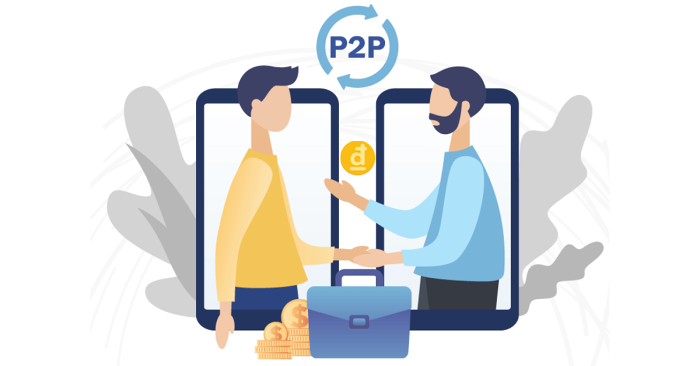
P2P trading is the process of buying and selling assets directly between users without intermediaries. This can apply to a variety of assets: digital currencies, goods, and services. Unlike traditional trading through centralized exchanges or banks, where the user acts through an intermediary, in the P2P model, both parties establish contact directly.
To simplify the process of finding counterparties and ensure the security of transactions, special platforms called P2P marketplaces are often used. They provide a space for posting buy or sell offers, as well as additional tools for protecting deals, such as escrow mechanisms.
How Does a Peer-to-Peer Network Function?
A peer-to-peer network functions based on mutual trust between its participants, but various technical solutions are often implemented to increase reliability. The key principles of a peer-to-peer network include:
- Decentralization. There is no single control center, and participants determine the terms of the deals themselves;
- Direct interaction. Transactions are made directly, without the participation of third parties who could interfere in the process or charge high fees;
- Distribution of responsibility. Each participant is responsible for their own actions, which requires a higher level of financial literacy;
- Protection mechanisms. To minimize risks, arbitration systems, trust ratings, and asset deposition during the transaction are used.
In the context of cryptocurrency transactions, P2P platforms additionally use smart contracts and escrow services so that funds remain locked until all conditions of the deal are met.
Custodial and Non-Custodial P2P Platforms
P2P platforms come in two types — custodial and non-custodial. Understanding their differences is important for choosing a platform based on your goals and risk tolerance.
Custodial platforms ensure the storage of participants' funds in their accounts. Examples of such services are Binance P2P and LocalBitcoins. Users trust their assets to the platform, which acts as a guarantor of the deal. At the same time, the platform can freeze an account, introduce restrictions, or change the rules at any time.
Non-custodial platforms, such as Bisq or Hodl Hodl, operate without control over users' funds. Here, all settlements occur directly between participants, most often through smart contracts or cryptographic deposition mechanisms. This format increases the level of privacy and control but requires a deeper understanding of the processes and greater responsibility on the part of the user.
Advantages and Disadvantages of P2P
Advantages of P2P Networks
- Cost reduction. There are no intermediary fees or they are minimal;
- More payment methods. Users choose a convenient way to transfer funds themselves;
- Global access. The ability to trade with people from different countries without the restrictions of traditional financial systems;
- Fast registration. Unlike centralized exchanges, registration on P2P platforms often happens without lengthy verification;
- Increased privacy. Many platforms allow users to remain anonymous;
- Flexibility of terms. The parties independently agree on the price, payment method, and other transaction parameters.
Disadvantages of P2P Networks
- Fraud risks. The lack of strict control makes it possible for bad actors to appear;
- Attention requirements. The user has to independently check the counterparty's reputation;
- Longer transaction time. Especially when paying by bank transfers or waiting for confirmation;
- Need to understand processes. For safe trading, you need to understand how escrow works, what documents are required to confirm payment, and other nuances.
The Main Method of Earning on P2P – Arbitrage

One of the most popular ways to make money is P2P arbitrage. It is based on finding price differences between different markets, countries, or platforms. For example, in countries with restrictions on buying cryptocurrencies, the price of Bitcoin can be significantly higher than in other regions.
The main steps of arbitrage:
- Monitoring prices on several platforms;
- Evaluating the speed of fund transfers between them;
- Accounting for deposit, withdrawal, and exchange fees;
- Assessing risks associated with delays and exchange rate changes.
Arbitrage requires quick reactions, an understanding of the laws of different countries, and a readiness to promptly resolve emerging difficulties.
Risks and Safety of P2P Operations
How to Protect Yourself in P2P Trading
To protect yourself when trading through P2P platforms, it is recommended to follow a number of rules:
- Check the counterparty's reputation. Most platforms allow you to see the user's rating, the number of completed trades, and reviews from other participants. Choose partners with a high rating and extensive experience;
- Use only platforms with escrow protection. Escrow is a mechanism where funds are blocked on the platform until all conditions of the deal are met. This significantly reduces the risk of fraud;
- Do not conduct transactions outside the platform. Some dishonest users may offer to make a payment directly, promising better terms. This is extremely risky and deprives you of the platform's protection;
- Be attentive to the details of the deal. Always check the amount, currency, payment method, and details before confirming;
- Exercise caution when sharing personal data. The less information about yourself you disclose, the higher your security.
Fraud Schemes and How to Avoid Them
Some popular fraud schemes in P2P:
- Reversing a bank transfer after receiving cryptocurrency. Some banks allow transfers to be canceled within a short time. To avoid this, you should wait for the final credit of funds, especially if the deal is large;
- Fake payment receipts. Scammers can send fake screenshots of fund transfers. Never send assets until you are sure the money has actually arrived in your account;
- Phishing sites. Scammers create clone sites of popular platforms. Always check the website address and use only official apps and resources;
- Pressure from the counterparty. Attempts to speed up the deal, intimidate, or rush you may indicate fraudulent intentions. Real professional traders never act this way.
Why Use P2P?
One of the main advantages of P2P deals is independence. Participants are not limited by the framework of a single bank or state. They can freely manage their assets, determine payment methods, and negotiate the most favorable terms.
In addition, peer-to-peer trading allows:
- Avoiding excessive control by banks and regulators, especially in countries with strict financial policies;
- Minimizing fees, which often reach significant amounts in classic transfers;
- Operating with a wide range of currencies and assets, including little-known altcoins, fiat money, goods, and services;
- Maintaining privacy due to the ability to trade without transferring personal information.
In the context of digital technology development and globalization, these advantages are becoming increasingly significant.
Conclusion
P2P trading is a phenomenon that has already changed the financial landscape and continues to transform approaches to asset exchange. With its help, users have the opportunity to trade directly with each other, without intermediaries and unnecessary costs, while maintaining control over their funds and observing confidentiality.
However, along with opportunities come new challenges: the need to be attentive, study the market, understand the nuances of conducting transactions, and ensure your own safety. P2P is a space where freedom goes hand in hand with responsibility.
Frequently Asked Questions (FAQ)
What is P2P trading in simple terms?
It is the buying and selling of assets directly between people without intermediaries like banks or centralized exchanges.
What risks exist in P2P trading?
The main risks include fraud, payment delays, transfer cancellations, and phishing.
On which platforms can I safely engage in P2P trading?
Popular and reliable platforms: Binance P2P, Bybit P2P, OKX P2P, etc.
Want to learn more about crypto arbitrage?
Get a subscription and access the best tool on the market for arbitrage on Spot, Futures, CEX, and DEX exchanges.

You might be interested
P2P Arbitrage Without Cards: The Ultimate Guide
P2P Arbitrage opportunities on Binance
P2P Arbitrage opportunities on Binance: What They Are and How to Find Them

Case Study of Arbitrage for P2P Traders: Local Exchange + Major Exchange
