


Digital Tokens Explained: Complete Guide 2026

with ArbitrageScanner!
The digital asset world has progressed from being an uncertain and experimental place to becoming a sophisticated system that drives the current global economy. Whether you’re an investor, developer, or business leader, having an understanding of digital tokens is no longer optional - it is a basic requirement in order to successfully navigate the 2026 financial environment. Although many people presume they mean the same thing, the truth is tokens represent a much larger transition to the “tokenization of everything,” from real estate to voting rights. This guide is a detailed and thorough overview of digital tokens, including their meaning, how they operate on blockchains, and how they're changing our perception of ownership and value.
Token Fundamentals
Basic concepts
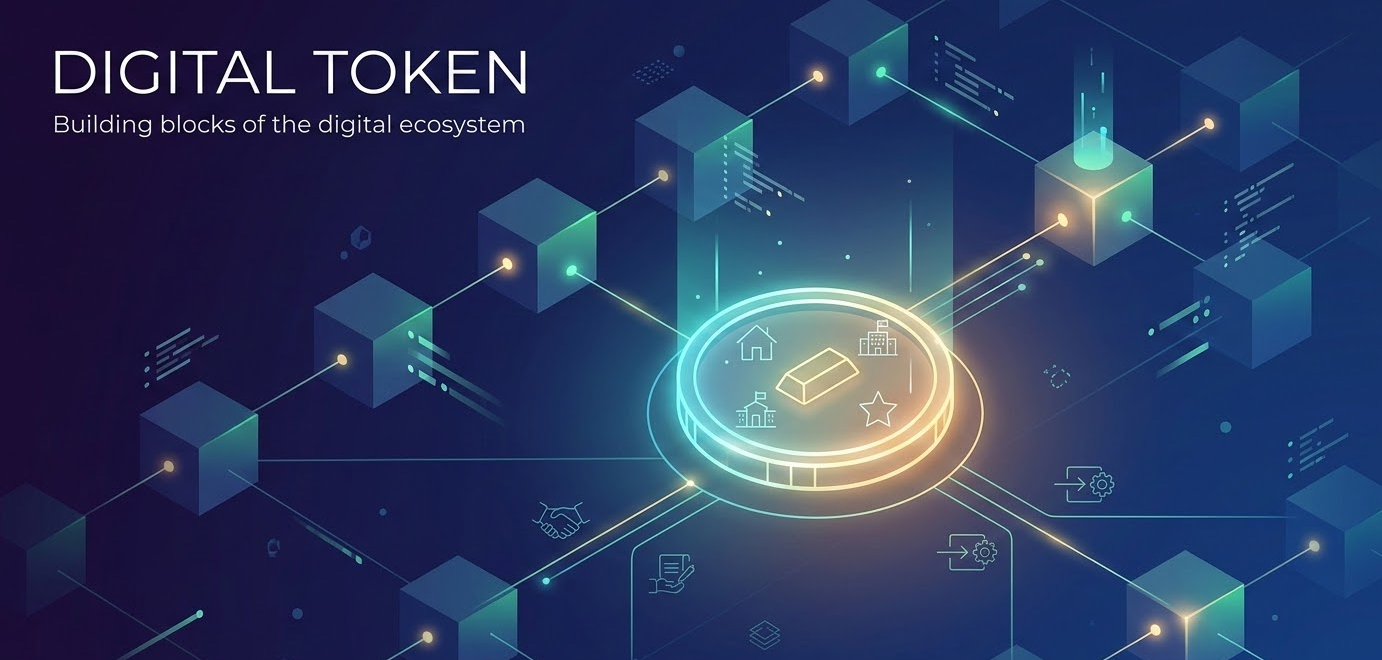
To understand the digital ecosystem, it is necessary to first define the fundamental building blocks that comprise it. A digital token is defined as a digital representation of an asset or utility which resides on an existing blockchain. Because they are programmable, tokens are fundamentally different from traditional forms of currency in that they can be programmed to include complex and sophisticated rules, which allow for automated transactions across multiple parties without intermediaries. A digital token is simply a digital unit of value that is issued by a group that builds on another group’s blockchain network. Digital tokens can represent anything from ownership interest in a business to loyalty reward points to physical property, such as a gold bullion bar. The true value of tokens comes not from their price per token, but rather from the specific rights or privileges granted to individual token holders.
Token vs coin differences
One of the most commonly made mistakes with digital asset terminologyIn general, coins (Bitcoin and Litecoin) are the native currency of a blockchain, primarily serving as either a means of exchanging goods and services or a store of value. They also have their unique blockchain. Tokens are created on a separate blockchain that already exists (Ethereum and Solana). Tokens do not own their distributed ledger technology (DLT) but rely on the security of the blockchain and the support of the underlying network.
Technical aspects
Technically, tokens are lines of code. These lines of code can be executed automatically, with no manual effort; they define how a token can be moved or transferred from one individual to another and what that token can be used for. Tokens are encrypted to create an unchangeable and non-duplicatable record of ownership of the token, creating a "secure online" way to move value throughout the world within seconds.
Blockchain relationship
Tokens are important to the overall sustainability of the blockchain. Most crypto projects use tokens to encourage users to maintain the reliability of the network or pay "gas fees" (transaction fees). The relationship between tokens and blockchain is bi-directional; the tokens provide economic incentive and utility for the ecosystem, while the blockchain provides the security and decentralization.
Token Types Analysis
Over time, the various kinds of tokens have become more specialized as the market has evolved, making it essential for investors to understand these categories for investment purposes and compliance with regulations.
Utility tokens
Utility tokens represent a means for users to access particular products or services; essentially, they are "coupons" or "keys" that users can "cash-in" when they need to access a particular product or service. For example, a project that uses decentralized cloud storage may require users to store files on their network by using their utility token.Although their values wiggle with the need for their service; they were not intended to be investments.
Security tokens
Traditional forms of securities—stocks/bonds/real estate—have a digital counterpart called a security token. Due to the fact that they represent an investment contract, security tokens fall under the jurisdiction of entities like the Securities and Exchange Commission (SEC). In addition to these advantages afforded by blockchain technology—fractional ownership and constant availability of trading—security tokens are still subject to regulation.
Governance tokens
The "democratisation of finance" is represented by governance tokens. Through the use of governance tokens, a holder of a governance token has an opportunity to vote concerning the future of their respective project; e.g., adjusting a fee schedule; or brainstorming new features to include. MakerDAO is a great example; maker holders govern the stability of a decentralised ecosystem.
Asset-backed tokens
Tokens are tied to the underlying asset owned within that token. Tokentisation is a process that breaks down high-value physical assets into smaller tradable digital divisions, thanks to how they are tied to the assets; they become investment instruments. The ability to liquidity through these tokens provides a way for average investors to invest in markets that have been previously closed off.
NFTs
Non-fungible tokens cannot be exchanged for one another equal. For example, all Bitcoin are fungible (i.e., 1 Bitcoin = 1 Bitcoin). However, NFTs each have distinct attributes (e.g., digital artwork, music files, a specific virtual plot of land in the "metaverse").
Technical Implementation
The process of creating and managing tokens requires particular tools/standards that enable transactions to function together within the digital world.
Smart contracts
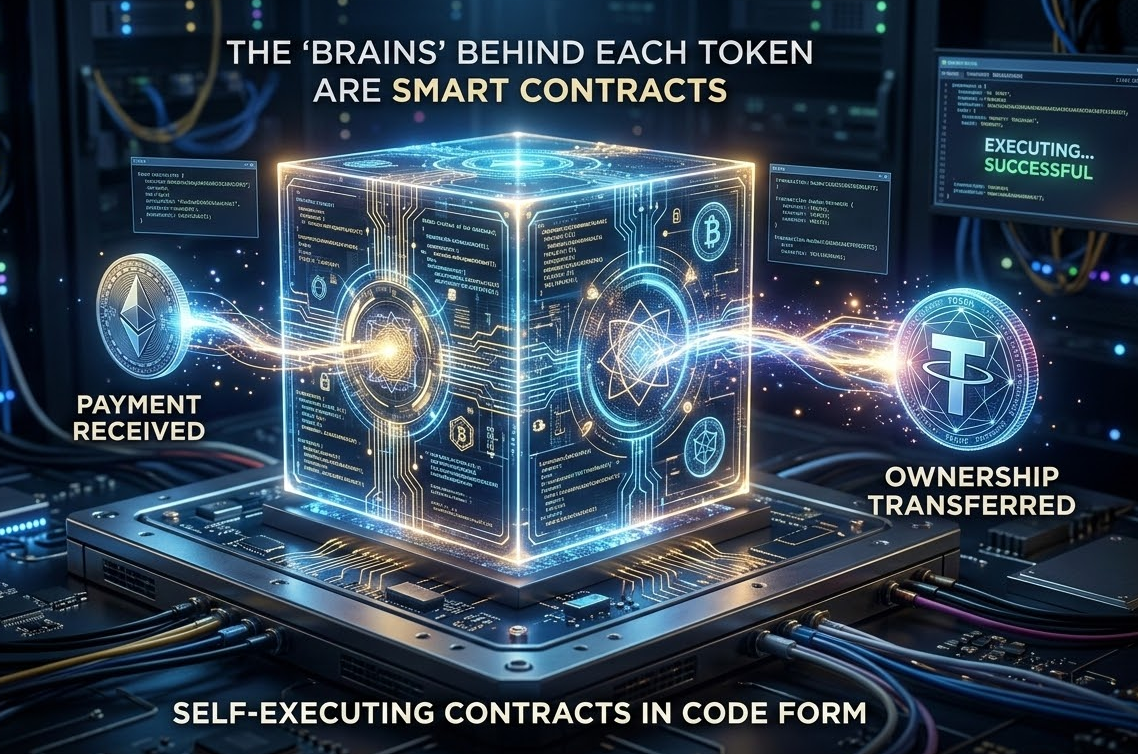
The 'brains' behind each token are smart contracts - self-executing contracts where the terms of the agreement have been put in code form. When an action happens, like payment for a token is received, the smart contract executes by transferring ownership of the token at that time.
Programming aspects
Tokens mostly take on standardized templates or forms. Tokens used on Ethereum's blockchain must adhere to ERC-20 (for fungible tokens) and ERC-721 standards (for non-fungible tokens). This means that any token will be able to be stored within any digital wallet and traded on any exchange that supports the Ethereum Network.
Platform requirements
In order for a project to create and launch a token, it needs to have access to a blockchain that can support their project. While Ethereum is still the dominant player in this space, there are numerous other blockchains (e.g., Solana; Binance Smart Chain; Cardano) offering lower costs to transact and faster transaction speeds that are gaining popularity. Ultimately, the chain that the token will be launched on will determine its scalability as well as its "gas" costs for users.
Creation process
The ease of creating tokens has increased dramatically over the years. Developers no longer have to build their own blockchain. They can use layers of protocol to build on top of currently existing protocols. Provided the developer has a secure and audited smart contract (and meets the requisite minimum standards for the token). As the laws surrounding cryptocurrencies continue to change in 2026, developers and investors alike are very concerned about how clear these laws are regarding tokens.
Legal Framework
Regulatory status
Government regulations regarding tokens have been created by how the government classifies tokens and how tokens are being used. In the United States, for example, the "Howey Test" is used to classify a token as a security or not. The European Union has also created regulations specifying how all crypto assets will be issued and traded under the MiCA regulation.
Compliance requirements
As part of the regulations that have been created, founders of any project now must follow strict KYC (Know Your Customer) and AML (Anti-Money Laundering) compliance requirements imposed by regulatory agencies. There are now regulatory agencies that are issuing fines and warnings against any companies that do not comply with KYC/AML compliance, which is helping to create a more organized and professional crypto market.
Jurisdictional differences
Regulatory laws are not the same in all jurisdictions, and therefore, some have become much friendlier to cryptocurrencies than others. Some examples of jurisdictions that are more crypto-friendly than others are Switzerland and Singapore, while there are others that have implemented strict regulations on the issuance and trading of crypto tokens or ICOs.
Future regulations
We will also see the continued shift in the regulatory view of tokens, especially in the context of DeFi, as regulators will focus much more on compliance requirements around the distribution of governance tokens and compliance requirements placed on dApps (Decentralized Applications) and how they manage and secure users' funds.
Market Applications
Use cases
Tokens will not only impact the market through the trading of tokens but will also provide many industries the opportunity to provide improved services. Example Use of Tokens:
- Supply Chain - Tokens will allow users to track their goods and service deliveries, ensuring accuracy and quality of goods.
- Gaming - Gaming tokens will allow players to own in-game assets and exchange them for actual money.
- Healthcare - Healthcare tokens will allow patients to share medical information securely, while allowing patients to access their medical data.
Industry adoption
Even major banks that have historically been against cryptocurrency are moving toward adopting it as a form of payment.Cross-border settlements can now occur instantaneously with tokenized currencies, which are a substitute for internationally accepted fiat currencies. This provides banks with an alternative method of settling transactions without using the slow and expensive SWIFT system.
Investment potential
The ICO (Initial Coin Offering) bubble burst experienced by investors in 2018 has left many investors wary of buying tokens. However, by 2026, the token market will have matured, and many investors will now consider token investments to be a legitimate asset class, leading to increased diversification of their portfolios containing utility or growth tokens as well as security or dividend tokens.
Market impact
Many trillions of dollars are now being "de-trapped" through tokenization by converting illiquid assets into tradable items. Tokenization has the potential to increase efficiency and transparency in all marketplaces due to the fact that it enables trading of non-physical items, such as intellectual property and carbon credits.
Token Investment
Purchase methods
Investors seeking to acquire tokens use several methods, including centralized exchanges (CEX) or decentralized exchanges (DEX), initial exchange offerings (IEOs) where the token is listed immediately on an exchange, and staking or yield farming, where liquidity is provided to the token network for earning rewards in return.
Storage options
The safety of stored tokens should be a primary consideration when an individual is investing in tokens and to prove ownership of your stored tokens, you should keep them in a digital wallet. Small amounts of tokens can be stored in a "hot wallet" (i.e., an app), but you should only use "cold storage" (i.e., a hardware such as a USB flash drive) for your stored tokens if you have a large amount of tokens.
Trading platforms
When selecting a platform, think about its liquidity, the range of “crypto" assets that can happen, and the security history of an exchange platform.
Risk management
Due to the fact that token markets experience volatility, an investor should only invest as much money as they are able to lose. There are still scams, “rug pulls,” and smart contract vulnerabilities. A thorough and complete analysis of a project’s whitepaper, as well as the team’s credentials and “tokenomics,” needs to be performed before committing any funds.
The Bottom line
Digital tokens aren’t just "virtual currencies," but they are actually creating a new digital economy through programmable building blocks. Since the beginning of the first publicly issued tokens such as Mastercoin, to the dynamic RWA protocols found in 2026, there has been a major transition between both physical and digital worlds. Tokens create a link between fractional ownership with automated trust and global liquidity. As both technology and legislation advance, tokens should become the primary medium to interact with value.
FAQs
How are digital tokens different from cryptocurrencies?
Cryptocurrencies (i.e., coins) are native currencies on a blockchain (ex. BTC on Bitcoin) and Tokens are built on top of already existing blockchains (ex. ERC-20 Tokens on Ethereum) for a specific purpose, as well as showing that they represent a specific asset.
What determines a token's value?
A token's value is determined by the utility of that token to the ecosystem, its scarcity (i.e., it's supply), the demand for that token from users (i.e., who wants to use it), and the overall success of the project to which that token is tied.
Which token type is best for investment?
The "best" type of token to invest in varies between individual investors and their investing goals. Security tokens provide legal protection and dividends, while utility tokens may provide a greater possibility of growth than other types of tokens, though they also come with more risks. The principle of diversification is the most important factor in considering an investment in tokens.
How are tokens regulated globally?
Regulation of Tokens is coordinated by the laws of the country in which an investor is located. The SEC in the U.S. consistently classifies Tokens as Securities, while the European Union's MiCA provides the base, comprehensive regulatory framework will regulate crypto-assets in the European Union. Most jurisdictions will require compliance with both KYC and AML regulations with respect to exchanges.
What makes tokens programmable money?
Since Tokens are based upon Smart Contracts, they are governed by smart contracts. The use of Smart Contracts allows for the automatic execution of an event such as the dividend payment or granting access to a file without needing to involve a third party.
Want to learn more about crypto arbitrage?
Get a subscription and access the best tool on the market for arbitrage on Spot, Futures, CEX, and DEX exchanges.
You might be interested
Cryptocurrency Nodes and Masternodes: Complete Guide
Cryptocurrency Decentralization: Complete Guide
Understanding Fiat and Cryptocurrency: A Complete Guide
