


NFT Games

with ArbitrageScanner!
The gaming industry is currently experiencing a significant shift from a closed-loop "pay to play" system to a transparent and decentralized ecosystem, in which players genuinely have ownership of their progression. By 2026, NFT-based games will no longer be just a simple experiment—they will establish a multi-billion dollar aspect of the industry and consumers will predominantly refer to this new aspect as "GameFi". This guide examines how blockchain technology has changed the definition of digital assets, allowing gamers to earn money while playing games of a very high quality.
Understanding NFTs and GameFi
"GameFi" is a term derived from the combination of the words "gaming" and "finance". This term represents a gamification of the financial system, where participants may obtain rewards which have value outside of the game. In a traditional video game, a player’s game achievement can only be accessed through the server of the company that created the game; however, through NFT games, it is possible to export your success.
The Rise of Blockchain Gaming
The transition from early experiments (e.g., CryptoKitties) to a sophisticated gaming industry has happened quickly. Today’s blockchain-based games can record every transaction on decentralized ledgers, allowing gamers to ensure that there is no manipulation of the game economy by developers or malicious entities.
How NFT Games Differ from Traditional Video Games
In traditional games, when you purchase a skin or a weapon, you are essentially "renting" that item. If the server shuts down, the item is gone. In contrast, NFT games provide true ownership of digital items. Since NFTs are on a blockchain, the player "owns" their digital asset, as opposed to the development studio or company. Players can use, trade, or even move these items to other games (in some circumstances) as well.
The Intersection of Gaming and Finance
Modern NFT games utilize advanced token models to encourage player participation in the network and reward players with crypto tokens or NFTs as they contribute to the value of the network by playing the game. It creates a circular economy, and players earn through their skills, time commitment, and strategic investment.
Understanding NFT Gaming Basics
To understand how NFT games operate, you need to understand what an NFT is. Non-fungible tokens (NFTs) are unique digital certificates that serve as proof of ownership of a specific item or content.
What Makes NFTs Unique
Every NFT is unique, unlike Bitcoin (BTC) — one BTC is identical to another BTC. In a game environment, each NFT card or RPG character is different from other cards/characters based on what traits, histories, and serial numbers they have. Scarcity drives the value of these items in the marketplace.
Blockchain Technology Behind NFT Games
Most NFT games are developed atop Ethereum, Polygon, or Solana. Each of these underlying networks serves as a backbone to the NFT game by providing the decentralized blockchain infrastructure needed to host the NFT smart contracts that define the creation and transfer of in-game assets. This blockchain technology ensures that no one can produce counterfeit versions of a rare item.
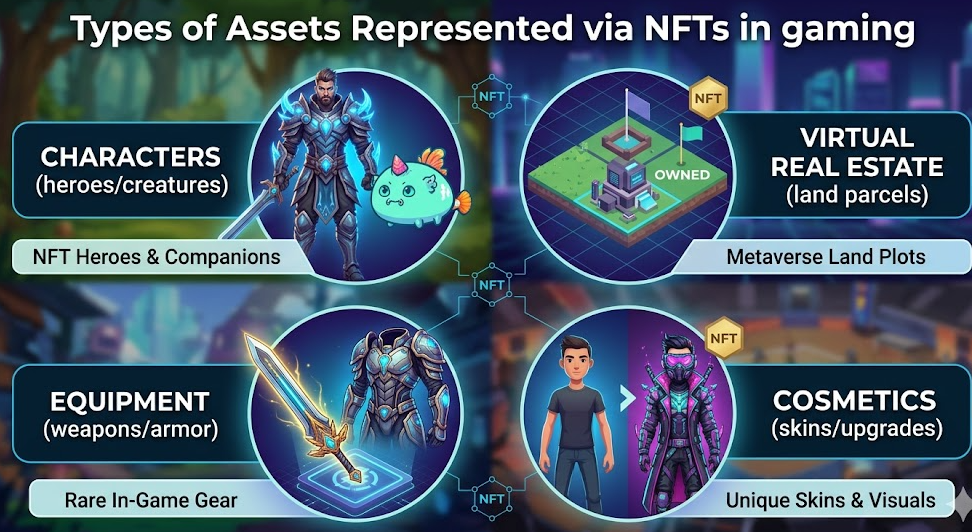
Types of Assets Represented via NFTs in gaming
- Characters: heroes in RPGs, or creatures such as Axies.
- Virtual Real Estate: land parcels in a metaverse world.
- Equipment: weapons, armor, or tools found in any of the above-mentioned MMORPGs.
- Cosmetics: rare skins or other visual upgrades.
How NFT Games Work
The magic of the NFT gaming experience occurs behind the scenes. This is a combination of front-end game play and back-end blockchain interaction.
Smart Contracts and Game Rules
A smart contract is a programmatic agreement that automatically executes based on conditions set forth within the code. It controls all the rules associated with the game, including the manner in which quests are completed and loot is distributed within the context of NFT games, thus removing the need for the intermediary role to verify an NFT trade.
How Players Interact With NFTs in the Game
Activities performed as part of a player's execution within the NFT game may also lead to transactions occurring through the blockchain. For example, a player winning a battle may trigger an item minting directly to their wallet within the game, and these types of interactions with in-game items help to make the game itself more engaging and rewarding for the players.
Ownership, Trading, and Marketplace Dynamics
The existence of an NFT marketplace provides players with an opportunity to profit from the sales of their digital assets. The pricing for these sales is determined by the law of supply and demand. For instance, if a popular NFT item is a necessity for high-level gameplay, the price of that item on an NFT marketplace will increase significantly.
NFT Games Built on Blockchain Networks
Ethereum was the first blockchain, and while it continues to be a leading host of NFT games due to its large number of users, more recent NFT blockchain networks such as Immutable X and Binance Smart Chain have grown in popularity because they have lower transaction fees. Players of NFT blockchain games have a better experience as users, as they do not incur large amounts of transaction fees in order to build up their NFT portfolios.
Description of the Play to Earn Model
The Play to Earn (P2E) model is what is driving the web3 gaming movement. The goal of the P2E model is to provide financial reward to players who invest their time and resources into games.
Ways Players Will Generate Income Through Game Play
The ways in which players can generate dollars through their play in a P2E game include but are not limited to: completing daily tasks, winning PvP battles, and being involved in community governance. Players can accumulate dollars through participation in these types of games and those dollars can be converted to real money at any time.
Rewards for NFT Assets
There are many great NFT Games currently available that provide you with dual rewards. You could receive rewards in a native game token (for use when improving your character) as well as a chance to receive a digital collectible (NFT) that can be sold at a high price.
Costs to Start Your Game
You may require an upfront cost to start playing some of the best play-to-earn NFT games; for example, if you wish to begin playing Axie Infinity you will need to first purchase three axies. However, many new Free-to-Play options have arisen to help with the entry cost of new players.
Shared Earnings and Scholarship Programs
Scholarships were developed to help new players with the entry fee of play-to-earn games. Scholarships allow experienced players who are unable to invest in the game to lend their assets to others.
Popular Play-to-Earn NFT Games
All these titles have been proven to have longevity and make excellent entry points for new players.
Axie Infinity: The Original Play-to-Earn
Axie Infinity revolutionized the gaming industry by creating the play-to-earn NFT model. Players breed and battle fantasy animals called axies to earn money while playing games. Axie Infinity is still widely regarded as the gold standard of NFTs.
Sorare: Fantasy Sports for the Blockchain
Sorare is a global card collecting/trading game featuring officially licensed NFT cards for players in the following sports: soccer, NBA, and baseball. Sorare is a perfect combination of classic card games and NFTs, creating an extremely high-value secondary market.
Gods Unchained: Strategy Card Game for Collectible Cards
Gods Unchained is considered one of the best blockchain games for those who love collectible card game style games like Hearthstone. Deck-building and winning tournaments allow players to create a skill-based gameplay experience while earning NFTs at the same time.
New Innovations and Titles Emerging from the Gaming Industry
In 2026, we are witnessing a tremendous advancement of RPG & Metaverse titles like Star Atlas and Illuvium that push beyond what has previously been possible. They utilize superior AAA graphics and highly sophisticated game design to avoid the simple click mechanics of earlier games.
NFTs and In-Game Collectables
The vast majority of NFTs have significant differences that lead to varying levels of value; some NFTs have value based purely on their level of use within a gaming platform.
Determining Value and Rarity in NFT Games
The majority of NFT Games are based around a tiered system of rarity (Common, Rare, Epic, Legendary). The gaming community will often use these different tiers to control the gaming economy and reward players who continuously invest in the gaming economy, creating a viable opportunity for earning extra income from gaming.
CryptoKitties as the Foundational Element of NFT Games
No discussion about NFT games would be complete without mentioning CryptoKitties. Not only was it the first popular NFT Game to prove that you could breed and trade digital assets, it also brought extreme congestion to the Ethereum network in late 2017.
Cosmetic NFTs vs Utility NFTs
If you have an NFT that only changes your appearance and does not add a higher level of functionality to how you play the game, it is a Cosmetic; whereas if you have a Utility NFT that adds a higher level of functionality to your gameplay, it is considered a Utility item. Typically, mid-to-high tier title developers will balance these two (Cosmetic & Utility) together so their games do not become "Pay-to-Win."
Long-Term Collector Value of NFTs
Most collectors who have a strong foundation of knowledge in NFT and Blockchain technology are generally looking for their favorite games to invest in through an NFT based gaming economy. As the number of established and historical rarity items continues to grow in NFT Blockchains, these items will increase in value and potentially become highly sought after and collectible over time.
Mystery Boxes & Collections Using Gacha Mechanics
Using Gacha Mechanics, NFT projects have successfully created mystery boxes for their collectors.
Mystery Box Mechanics - How They Work
A mystery box will include a random NFT that is from a certain collection. Each project uses an NFT, and its integration with Blockchain Technology, to create an element of surprise when playing NFT games. Just like opening a pack of cards, you will be surprised at what you receive.
MOBOX Collection and Yield Farming Integration
MOBOX is a great example of how games can be created to earn money by using "Momos". These NFTs are used in the game for gaming purposes; however, they are also used for Yield Farming and generate passive income. This means that DeFi & Gaming are becoming effectively blended together.
My Neighbour Alice and Virtual World Assets
In My Neighbour Alice, the NFT projects involve Virtual World Assets. Players have the ability to buy land and use NFTs to create their own farms. This helps create social gaming experiences by providing each player a game in which to socialise. Socialising in the game is comparable to being social in Animal Crossing while still having real monetary value.
Getting Started in NFT Gaming
Ready to Jump in? Follow these steps to discover a game that fits both your style of play and budget.
Choosing a Game That Will be Interesting to You
You don't need to be too concerned about how much money you can earn. You need to choose a game that you enjoy playing, whether it is a Card Game, an RPG, or a Game that has to do with exploring the Metaverse, the most successful experience is always with a game you love to play.
Set Up Wallets and Make Your Initial Investments
Before you can play an NFT Game, you must create a Crypto Wallet (for example, MetaMask). In order to begin earning rewards within an NFT game, you will need to set aside the cryptocurrency requested by the platform offering the NFT game to purchase your first in-game assets.
Gas Fees and Transaction Costs
Every action on a blockchain has a cost, referred to as "gas." Some NFT games permit players to engage via Layer 2 solutions which ultimately result in only a few cents for gas fees; games based on the Ethereum blockchain tend to have higher-than-normal transaction fees during peak hours of usage.
Risk Management Strategies for New Players
Due to the volatility of the cryptocurrency market, new players should never invest more than they can afford to lose. Prior to making any significant investments, new players should fully investigate both the NFT game developers as well as the long-lasting sustainability of the in-game tokens.
The Bottom Line
NFT games serve as a bridge between entertainment and financial gain. By utilizing blockchain technology, NFT games provide users with digital ownership of the assets they acquire and can ultimately earn while playing. As we move into 2026 and beyond, more game developers will continue integrating web3 features into their games so that play-to-earn becomes the norm rather than something only offered in select titles. The most popular NFT games allow both casual gamers or serious crypto investors another way of enjoying the digital world.
FAQs
What is the typical starting cost required in order to start making money with popular NFT games?
The answer to this question is that you should not just spend the amount requested; you must research the NFT game before making an investment to determine its actual market value. Some of the newer NFT games offer free-to-play opportunities while older, more established NFT games like Axie Infinity will typically cost between $20 and $100 to purchase your first NFT.
What are the tax consequences of monetary earnings through play-to-earn NFT games?
Most countries around the world recognize cryptocurrency and NFTs as taxable income, so earnings will be taxed when the reward is earned. In addition, if you earn more on the sale than what you spent purchasing it, your profit may also be subject to capital gains tax. It would be wise to consult with a qualified professional who is knowledgeable about taxes in your respective country.
How long can I expect to see continued sustainability of the play-to-earn NFT economy?
The Liquidity Pool of NFTs will depend on the ongoing development of the game and its ability to retain existing players. NFT games that rely on new players entering the game (like a Ponzi scheme) typically do not succeed, while NFT games with real-world utility and fun gameplay continue to thrive.
What happens to the NFTs used in-game after the NFT game ceases to operate?
You retain possession of your NFT on the blockchain; however, because the game is no longer in operation, you will not be able to use it while in-game or receive any financial benefits from the NFT after the game is no longer playable. However, several NFT projects have incorporated their NFTs into multiple games, providing long-term value.
How do I assess the potential rewards for a specific NFT game before I invest?
Review the tokenomics of a particular NFT or NFT featured in the whitepaper or summary of tokenomics, the credibility of the game developers, previous successes, players' active participation in the NFT game, and the history of the market in which the NFT trades. Most likely, if a particular NFT has considerable trading volume on a market, it is less risky.
Want to learn more about crypto arbitrage?
Get a subscription and access the best tool on the market for arbitrage on Spot, Futures, CEX, and DEX exchanges.
You might be interested
BTC vs. USDT as Quote Currency
Bitcoin Rainbow Chart Guide
The Inverted Hammer Candlestick Pattern
